India's Central Bank Unveils Currency-Defense Package, Rupee Posts Biggest Gain in Six Months
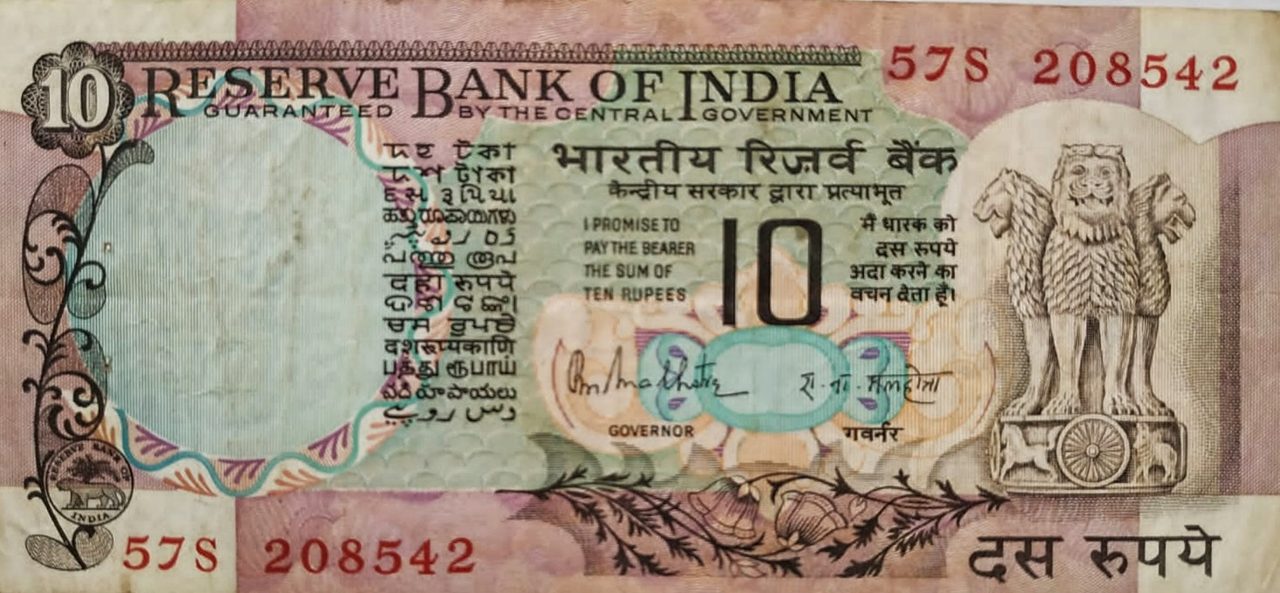
Photo: Billjones94 / CC BY-SA 4.0 · via Wikimedia Commons
India's Central Bank Unveils Currency-Defense Package, Rupee Posts Biggest Gain in Six Months
Rupee leaps 96 paise as markets reopen
The Indian rupee opened at 95.76 to the dollar on Monday, October 12, after settling at 96.73 on Friday. It climbed as far as 95.5850 before ending at 95.77, a gain of 96 paise, or nearly 1 percent — the biggest single-day jump since April and the strongest session in six months. Even after the rally, the rupee is still down roughly 6.5 to 7 percent this year, one of the worst-performing currencies in the region.
Four measures announced on Saturday
The Reserve Bank of India unveiled the package on Saturday, October 10, as the currency hovered near its record low, aiming to drain dollar demand from the spot market and curb speculative positions. The four steps: a dedicated dollar window for three state-owned oil refiners, a first-ever foreign exchange risk reserve, a cut in the threshold for derivative trades without underlying exposure from $100 million to $5 million, and a bar on rebooking cancelled rupee-linked derivative contracts. The RBI said the measures are intended to "strengthen market discipline and ensure appropriate risk management in the foreign exchange market, while maintaining an orderly and transparent market environment."
Oil companies now buy dollars straight from the RBI
Effective October 12 and in place until further notice, Indian Oil, Hindustan Petroleum and Bharat Petroleum will have their entire daily dollar requirement met by the central bank through designated banks, keeping that demand out of the spot market. The three refiners are India's largest crude importers. Bank of Barodian chief economist Madan Sabnavis estimates such companies buy $5.5 billion to $6.5 billion of forex a month — a large block of demand removed from the market in one stroke.
A 20% cash reserve on large forex hedges
For the first time, the RBI introduced a foreign exchange risk reserve: authorised dealers must hold with the central bank, in cash, 20 percent of the rupee equivalent of the notional amount of each derivative contract above $2 million that hedges current-account exposure with the user buying foreign currency against the rupee. The bank also said cancelled rupee derivatives cannot be rebooked, though maturing contracts may still be rolled over.
The governor's line: the rupee may be undervalued
Appearing after the monetary policy meeting on October 7, Governor Sanjay Malhotra said: "By a number of estimates, including the real effective exchange rate, the rupee is not overvalued; it may be undervalued." He added that markets "can be quite irrational in the short run" and that the RBI "will ensure that the rupee stabilises, that the rupee finds its correct value." Days earlier the central bank raised its repo rate by 25 basis points to 5.5 percent, its first increase in nearly four years, and shifted its stance from neutral to "calibrated tightening."
Traders read 97 as the line in the sand
The rupee's all-time low of 96.9650 was set in May, and Friday's close of 96.73 left it within striking distance. "It is absolutely evident now that 97 per dollar is the RBI's line in the sand for the rupee," said Abhishek Upadhyay, an economist at ICICI Securities Primary Dealership. A Dow Jones report argued that, taken with the governor's undervaluation remark, the message is to steer clear of pushing the currency toward 97-98. G. Mahalingam, a former RBI executive director, called the steps "some of the strongest we have seen since the taper tantrum."
Oil prices and capital outflows drive the slide
Three pressures remain: Brent crude traded at about $103.55 a barrel on October 12, with the U.S. Energy Information Administration projecting a $105 average in the fourth quarter; the Middle East conflict and disruption along the Strait of Hormuz keep a geopolitical premium embedded in energy prices; and rising developed-market yields continue to pull foreign money out. The RBI had earlier leaned on its diaspora deposit scheme, which raised a record $133 billion, lifting reserves close to $800 billion in early September before they fell by $51 billion, partly through dollar sales to defend the currency.
Importers will pay more to hedge
Exporters' hedging is untouched by the new rules, but market participants expect importers' hedging costs to rise by around 1.3 to 1.5 percent, especially on long-tenor contracts. Citi said in a note that the package raises the immediate cost of trades positioned to benefit from rupee depreciation. BofA Global Research expects the measures to aid the rupee and curb speculation, while other analysts warn the effect may fade unless import costs and capital outflows ease.
Bonds and stocks absorb the cost
The bond market took the hit: the benchmark 10-year government bond yield rose to 7.3707 percent, its highest in three years, from 7.2994 percent on Friday — the worst day in six months and an eighth straight weekly increase totalling 54 basis points. Equities fell too, with the Nifty 50 declining 157.10 points, or 0.70 percent, to 22,363.35, led by bank stocks. Kotak Mahindra Bank estimates the measures could withdraw around 1.5 trillion rupees of durable liquidity if they run for another month, adding to expectations of further tightening.
What comes next: oil, outflows and reserve data
Dhiraj Nim, a forex strategist at ANZ, said the package "buys time but doesn't change the picture: oil prices and capital flows will still decide the rupee's direction." Reserve data due in the coming week will show how much intervention the RBI has deployed. Kunal Kurani of Mecklai Financial cautioned that such fixes have "limited staying power unless the underlying pressures on the currency begin to abate." Several analysts now treat 96.9650-97 as the level the central bank must hold, while expecting sharp swings in forward premiums and a reordering of corporate hedging strategies.
Sources
- Reuters: Rupee jumps 1% after RBI redirects oil dollar demand, raises cost of some FX hedges
- Bloomberg: Rupee Jumps as India Central Bank Mounts Currency-Defense Measures
- Business Standard: Rupee posts biggest gain in 6 months after RBI measures to support currency
- Moneycontrol: Rupee defence raises question of how far RBI will go
- CNBC: India unveils tough curbs on dollar demand to defend rupee