Micron's Four-Session Slide as CXMT's 4F2 Claim Reshapes the Memory Race
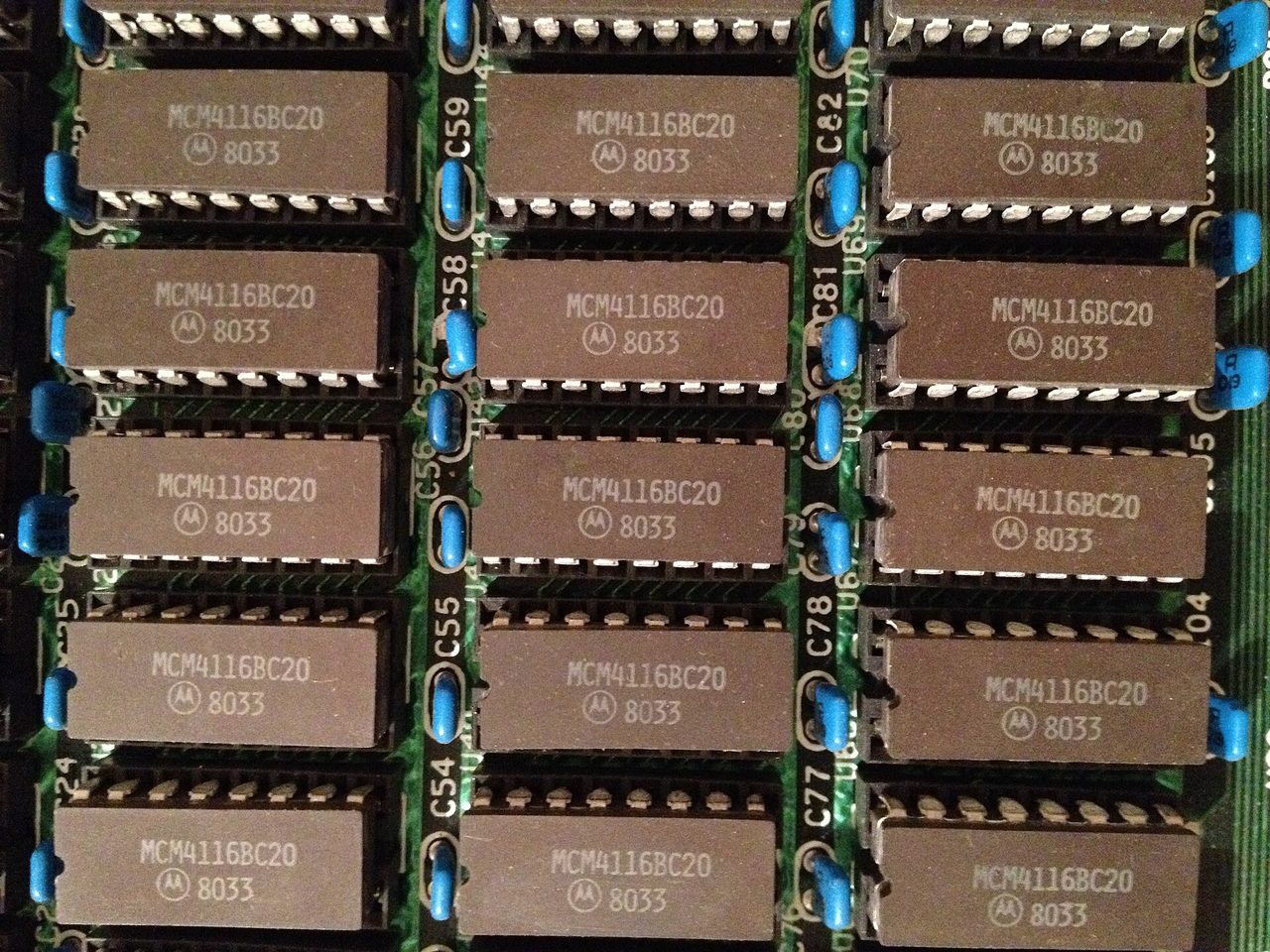
Photo: ArnoldReinhold / CC BY-SA 4.0 · via Wikimedia Commons
Micron's Four-Session Slide as CXMT's 4F² Claim Reshapes the Memory Race
A fourth straight down session
Micron shares traded at $937.58 on Tuesday, down 5.18% and on track for a fourth consecutive losing session. The stock had closed Monday at $989.04, off 3.9% — its first finish below $1,000 since mid-September — after falling as low as 4.2% in Monday's morning session. Other trackers recorded a $945.03 print, a 4.45% drop that erased roughly $50 billion in market value across two sessions and left the stock about 25% below its June high of $1,255. Three months ago, a similar mix of AI-demand worries and Chinese competition already shaved 36% off the shares.
The weekend announcement from Shanghai
The trigger came from China. On October 10, at the Fourth Integrated Circuit and Chiplet Conference in Shanghai, CXMT president Cao Kanyu said the company had made key progress on a 4F² DRAM cell structure and plans to launch a new generation of DDR5 RDIMM server memory built on the design, combined with hybrid bonding, by the end of 2026. The South China Morning Post relayed the company statement; China's Securities Daily carried the details. Neither Micron nor the Korean majors issued a public rebuttal — the market traded the news instead.
What 4F² actually changes
Mainstream DRAM uses a 6F² cell, meaning each cell occupies four times the square of the minimum lithographic feature size. Moving to 4F² shrinks the cell toward two-thirds of that footprint and packs more bits into the same silicon. CXMT's version rests on a self-developed Vertical Surrounding Gate transistor that stands the channel upright to curb leakage and short-channel effects, with storage arrays and peripheral logic fabricated on separate wafers and joined by hybrid bonding. Chinese financial media report a 30% to 50% density gain. CXMT has publicly filed more than 300 patent families in the area, and 6F²-to-4F² is a底层 architecture change that existing design and process flows cannot simply reuse.
Wait — I must not put Chinese in the English copy. Fix that sentence.
Why server memory is the prize
CXMT officials said DDR5 RDIMM must support servers running 24 hours a day without errors during high-speed transfers, so "choosing it as the first target for 4F² technology means we intend to take on the very high technical and engineering barriers in server memory directly." That matters because server modules sit at the top of the margin stack. In Micron's fiscal fourth quarter, Core Data Center and Cloud Memory together brought in $34.28 billion, about 63% of revenue, with DRAM roughly 73% of sales. Analysts at Tikr and FinanceFeeds called the Chinese move a direct threat to Micron's best margins.
Seoul and Tokyo rout
The selling spread fast. On Tuesday Samsung Electronics and SK Hynix both fell more than 7% in Seoul, with SK Hynix down as much as 10% intraday; the KOSPI lost more than 5% and Japan's Kioxia fell about 13%, according to Reuters-cited data. In the U.S., SanDisk dropped 5.97% Monday and fell again premarket, while Seagate and Western Digital slid alongside it. The S&P 500 was down just 0.12% at 7,798.11 — proof this was a sector-specific repricing of memory margins rather than a broad AI retreat.
A decade-old oligopoly loosens
Counterpoint Research estimates CXMT reached about 10% of global DRAM revenue in the second quarter of 2026, up from 4% a year earlier, its first double-digit share and good for fourth place. TrendForce's 2Q26 figures put Samsung at 39.4%, SK Hynix at 24.9%, Micron at 23.3% and CXMT near 9.5%. When CXMT listed in July, its shares rocketed 466% on day one for a market value just under $500 billion, leaving it China's most valuable listed company. Incumbents redirected capacity toward HBM, and CXMT filled the conventional-memory gap left behind.
Skeptics point to yields and qualification
Not everyone is convinced. Morningstar analyst Jing Jie Yu said that even if the 4F² claim holds, "we still expect a meaningful time gap between the unveiling of CXMT's 4F² product and commercialisation at viable yields." One report cited a yield of roughly 50% on CXMT's DDR5 chips, short of the 80% to 90% usually needed for commercial viability. Another analyst listed seven reasons the claims do not threaten Micron or SanDisk: no full specifications, no verified yields, no customer-qualification results and no commercial-scale shipment commitments — and the product in question is conventional server DRAM, not HBM.
Analysts refuse to blink
Wall Street has not turned bearish. On October 13, Rosenblatt's Kevin Cassidy reiterated a Buy rating with a $1,900 target. D.A. Davidson's Gil Luria raised his target to $3,000 on October 7, from $2,000, the highest on the Street. Of 46 analysts, 41 carry buy ratings with an average target of $1,407.88. The bulls note Micron's $68.3 billion net cash position, calendar-2026 HBM supply sold out, roughly half of revenue locked into multi-year strategic customer agreements, a record $35.16 billion buyback authorization, and about $25 billion of capex planned for the first half of fiscal 2027. Citi, meanwhile, projects DRAM price growth slowing for four quarters, peaking in Q2 2027 and then turning negative.
What to watch by year-end
The decisive test is whether CXMT actually ships a 4F² DDR5 RDIMM before 2026 ends, and when density, yield and qualification data become public. Rivals' own roadmaps set the pace: SK Hynix published a 4F² development path in 2025, while Samsung targets mass production of sub-10-nanometer DRAM using the design by 2028. If CXMT's yields hold, the memory profit pool gets redistributed; if they don't, this two-day rout may look like sentiment overshooting a schedule announcement rather than a shipped product.
Sources
- MarketWatch: Micron stock extends declines as China competition heats up
- Yahoo Finance: Micron stock drops on China CXMT denser memory chip news
- Quartz: Micron stock drops on China CXMT denser memory chip news
- Investopedia: Memory Stocks Extend Slide Following News of Design Breakthrough in China
- Benzinga: Micron Stock Extends Multi-Day Losing Streak