Goldman Sachs Blows Past Estimates as Trading Boom Overshadows JPMorgan's Rare Miss
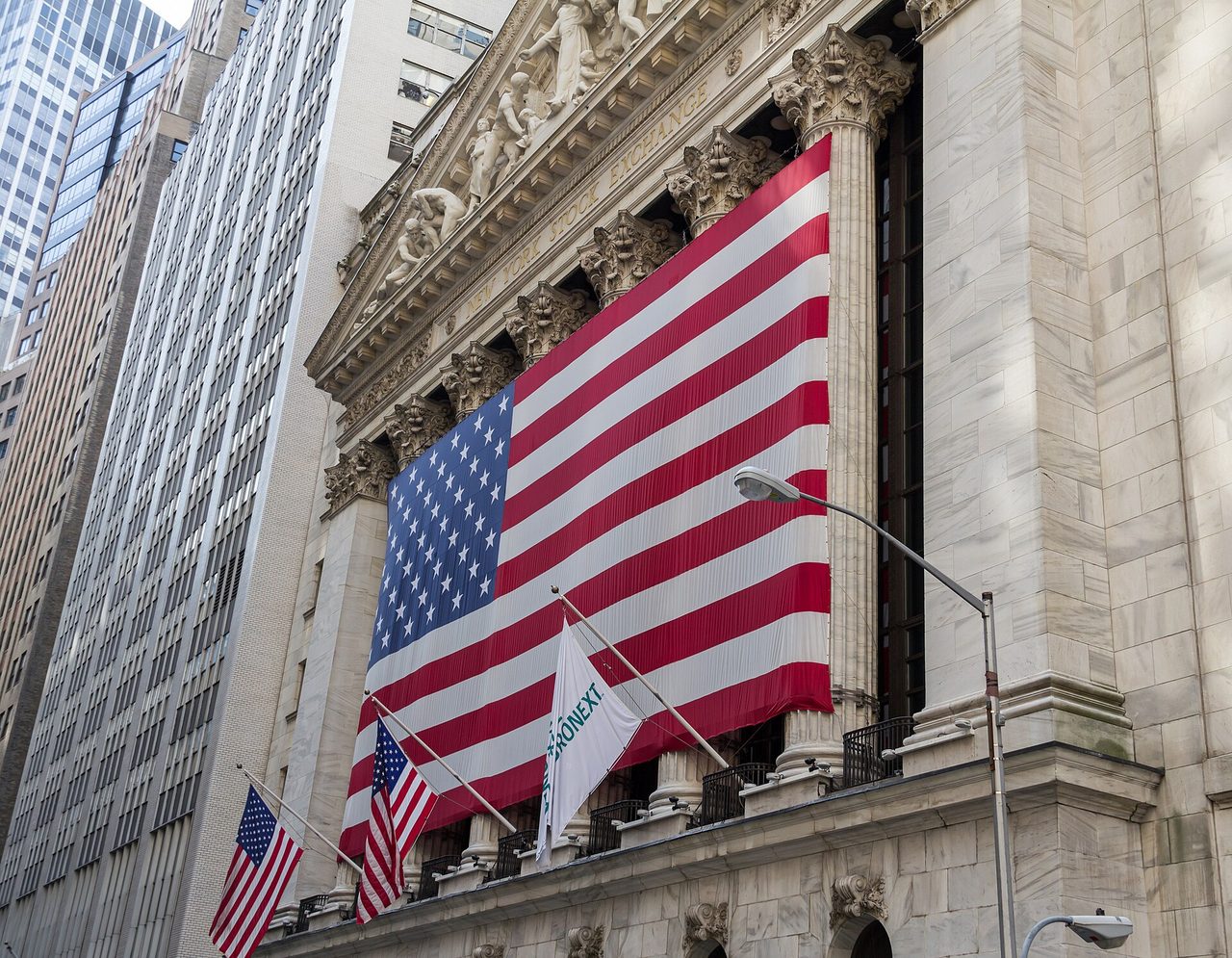
Photo: Dietmar Rabich / CC BY-SA 4.0 · via Wikimedia Commons
Goldman Sachs Blows Past Estimates as Trading Boom Overshadows JPMorgan's Rare Miss
Goldman Beats by 32% With $17.01 EPS
Goldman Sachs kicked off the big-bank earnings season on Tuesday with a blowout third quarter. The firm earned $17.01 in diluted earnings per share on net revenue of $18.68 billion, up 23% from a year earlier and the second-highest quarterly total in the firm's history. Net earnings reached $5.29 billion, versus $4.10 billion, or $12.25 per share, in the same quarter of 2025. Analysts had expected $13.09 per share on the investing.com consensus and $13.02 per share in LSEG estimates, which means Goldman cleared the bar by $3.92, a surprise of roughly 32%. Annualized return on average common shareholders' equity came in at 18.7%.
Trading and Record Advisory Fees Drive the Beat
The engine was equities. Revenue from the equities business jumped 72% year over year to $6.44 billion, roughly $1.42 billion more than analysts had projected, as volatility tied to the Middle East conflict drove client activity. Fixed income, currencies and commodities slipped 1% to $3.47 billion, a rare soft spot. Investment banking fees rose 21% to $3.22 billion, lifted by equity underwriting and a record $1.65 billion in advisory fees — $6 million above the firm's previous record set in the third quarter of 2021. Asset and wealth management revenue climbed 14%.
Solomon Cites Client Reliance in a Complex Environment
Chairman and chief executive David Solomon said the results came "against the backdrop of a complicated operating environment," with clients continuing to turn to Goldman for "world-class advice, execution and financing capabilities," producing the bank's second-highest quarterly net revenues and record year-to-date net revenues. He added that "notwithstanding the current complexity and uncertainty in the world, we remain very well positioned" to deliver for clients.
JPMorgan Provides the Counterpoint
The same morning produced a very different headline at JPMorgan, which reported earnings per share of $5.57 against the $5.90 analysts expected — its first profit miss since the fourth quarter of 2023. Excluding $658 million in net securities losses, EPS would have been $5.75, still short of consensus. Goldman's results, not JPMorgan's, are the focus here, but the contrast matters: two of Wall Street's largest banks reported within hours of each other and landed on opposite sides of expectations, which is why bank stocks did not move as a block.
Why Volatility Converts Into Revenue
Goldman's mechanics are straightforward. Wild markets push volume, hedging and rebalancing onto trading desks, and that flowed straight to the equities line. Dealmaking added a second leg: even as merger announcements ran well below the 2021 pace, fee captures per deal were large enough to set a record. The flat fixed-income result shows the wind was not uniform, mirroring the weakness JPMorgan reported in its own bond-trading franchise.
Bank Stocks Split as Chip Sell-Off Steals the Show
Price action was one-directional per name: Goldman rose as much as 3.8% before the bell and later held a gain of about 1.9%, JPMorgan slipped 3.4% premarket before turning roughly 1% higher, and Wells Fargo — which beat on profit but missed on revenue — fell about 1%. Beyond banks, memory chips dominated the session. South Korea's KOSPI tumbled 5.5% to close at 6,035.35 — its lowest close since July 31 — after dipping below 6,000 intraday and triggering a brief trading halt; Samsung closed 6.79% lower and SK Hynix 9.47% lower after both fell more than 7% and 10% at one point. In the U.S., Micron dropped more than 4% premarket, Sandisk lost nearly 5%, and the SOXX semiconductor ETF fell nearly 2%.
The Indexes Split at the Open
At the opening bell, the Dow industrials rose 242.4 points, or 0.47%, to 52,092.99, while the S&P 500 fell 12 points, or 0.15%, to 7,795.27 and the Nasdaq Composite dropped 107.2 points, or 0.39%, to 27,138.73. Nasdaq 100 futures had earlier fallen 0.7% as chip weakness persisted. In other words, bank earnings supported the Dow while chips dragged the growth benchmark.
Who Wins and Who Loses
Goldman shareholders and its bankers are the clear winners: record advisory fees widen the compensation pool, and an 18.7% return on equity strengthens the case for buybacks and dividends. Holders of memory chips and Wells Fargo shares sit on the other side. XTB's strategists argued the bank prints are more likely to lift the Russell 2000, which tracks the domestic economy, than the AI trade.
What Comes Next
Citigroup reports later Tuesday with a management call, while Bank of America, Morgan Stanley, BlackRock and State Street follow on Wednesday. JPMorgan has raised its full-year net interest income guidance to $106.2 billion and expense guidance to $108.6 billion, and its executives warned that large fiscal deficits, sticky inflation, elevated asset prices and geopolitical shifts continue to move "under the surface." Whether Goldman's advisory record carries into the fourth quarter — and whether the memory-chip rout keeps pressuring the Nasdaq — are the two questions that matter for the rest of the week.
Sources
- Reuters: S&P 500 opens lower after bank earnings; chips weigh
- CNBC: Bank earnings October 2026: Live updates
- Associated Press: Big banks post strong Q3 profits, but warn higher rates and inflation could bite
- Bloomberg: S&P 500 Futures Little Changed as Banks Report, Chipmakers Fall
- Investing.com: Bank Earnings Q3 2026: Goldman +30% Beat, JPMorgan Misses Revenue