He Says Ozempic Took His Sight. He's One of Hundreds Suing.
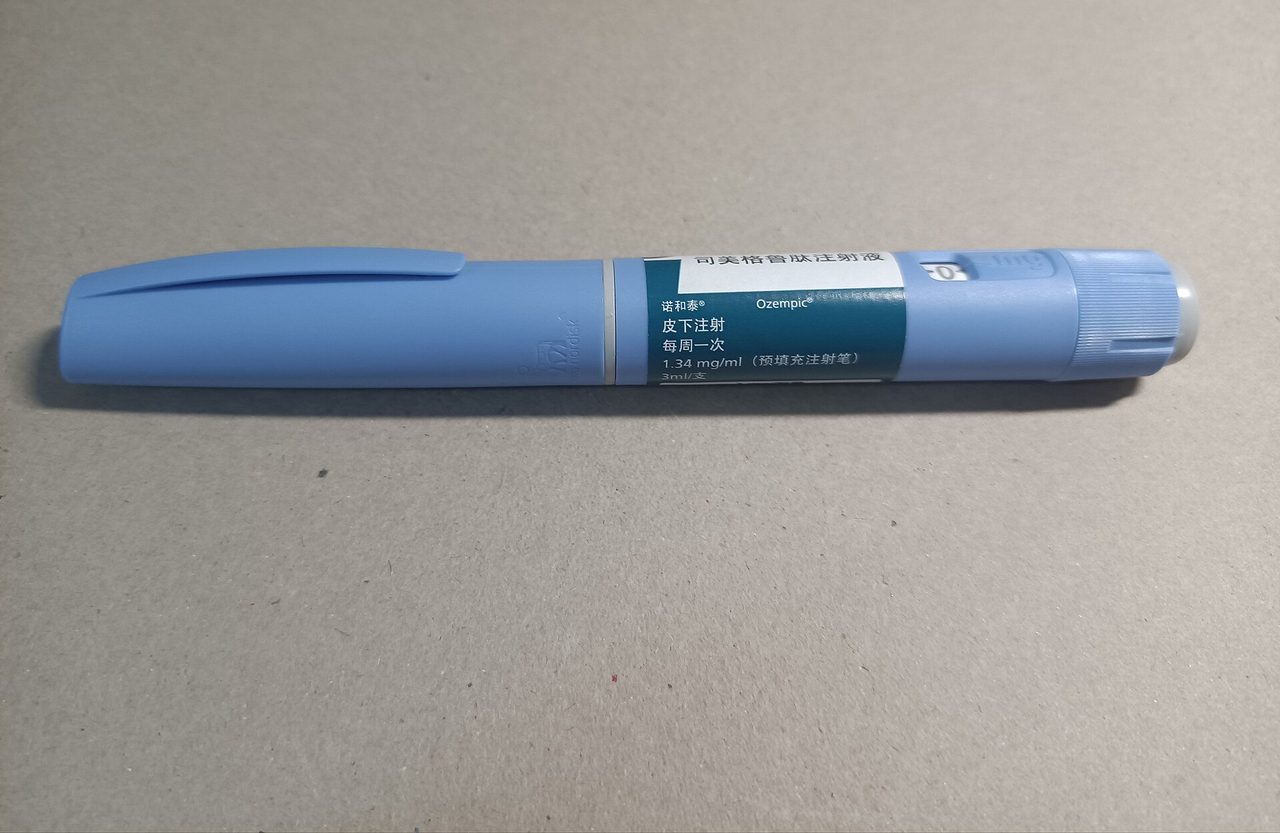
Photo: HualinXMN / CC BY-SA 4.0 · via Wikimedia Commons
He Says Ozempic Took His Sight. He's One of Hundreds Suing.
A blacked-out eye on New Year's Eve
"I had just gotten out of the shower, was getting ready to go to work. And I said to Shelley, 'I can't see in my right eye. It's totally black.'" That was New Year's Eve, 2024. His wife says medical testing never turned up another common factor besides Ozempic. He stayed on it until vision began failing in his second eye, then stopped immediately. He is now legally blind: he has quit his job, given up his commercial driver's license and can no longer watch his grandchildren play baseball. He has sued Novo Nordisk, the Denmark-based maker of Ozempic, alleging the company failed to warn about the risk of vision loss.
Doctors describe it as a 'stroke' of the optic nerve
The diagnosis has a clinical name: non-arteritic anterior ischemic optic neuropathy, or NAION. Reduced blood flow damages the optic nerve, producing sudden, painless vision loss — often noticed on waking and usually in one eye first. Ophthalmologist Dr. Joseph Rizzo has likened it to a "stroke" of the optic nerve. Background incidence is roughly 2.3 to 10.2 cases per 100,000 people per year, per the American Academy of Ophthalmology, with 15 to 25 percent of single-eye cases eventually affecting the other eye. There is no proven treatment that reverses the damage.
Hundreds of claims, one courtroom in Philadelphia
As of Sept. 1, 2026, 216 actions were pending in the federal consolidation devoted to NAION — MDL No. 3163, before U.S. District Judge Karen S. Marston in the Eastern District of Pennsylvania. Medscape reported the docket had grown to 247 cases by October, up from 29 in January. The December 2025 MDL covers seven GLP-1 drugs, including Ozempic, Wegovy, Mounjaro and Zepbound. A separate gastrointestinal-injury MDL grew from 3,063 to 4,025 cases in the same period. Plaintiff Edward Gillen of Massachusetts says roughly a year on Ozempic ended his 39-year state highway career.
Novo Nordisk says the cases have no merit
Novo Nordisk disputes the claims. "Novo believes the personal injury lawsuits filed in the U.S. are without merit and we are defending them in court," company spokesperson Liz Skrbkova said. Dr. Tina Vilsbøll, a senior medical officer at Novo, told The Wall Street Journal that studies showed no causality between NAION and Ozempic. The company says its pooled analysis of randomized, placebo-controlled trials found no increased incidence of NAION compared with placebo, and it points to later research that casts doubt on causality. Eli Lilly, maker of Mounjaro and Zepbound, has likewise denied the allegations.
What the evidence actually shows
The scientific signal first surfaced in 2024, when researchers at Mass Eye and Ear in Boston published an observational study in JAMA Ophthalmology finding that patients with type 2 diabetes prescribed semaglutide were more than four times more likely to be diagnosed with NAION than those on other diabetes medications. The absolute risk remained very low, and Rizzo, a co-author, called the findings "significant but tentative." Later work has sharpened the picture. Chintan Dave, the Rutgers researcher who led one review, estimates roughly three to four additional NAION cases per 10,000 patients treated with GLP-1 drugs over 18 months, with most cases in men or adults aged 50 to 65. A JAMA Network Open study of 588,168 veterans found 39.07 versus 29.33 NAION cases per 10,000 over three years (GLP-1 starters vs. SGLT2-inhibitor users) — about one extra case per 1,000 patients. A meta-analysis of 15 studies covering more than 1.5 million patients found about 70 percent higher relative risk (OR 1.70; 95% CI 1.23–2.36), with absolute risk of 0.09 percent versus 0.053 percent.
Europe warns; the U.S. label does not
Regulators have split. In June 2025, the European Medicines Agency's safety committee concluded that NAION is a very rare side effect of semaglutide, potentially affecting up to one in 10,000 users; labels for Wegovy and Ozempic were updated in Europe, and Denmark has compensated patients for vision loss linked to the drug. In the United States, the FDA flagged a vision-loss signal in 2025, but as of September 2026 the U.S. labels for Ozempic, Wegovy, Rybelsus and Mounjaro warn about diabetic retinopathy complications — not NAION. The AAO and the North American Neuro-Ophthalmology Society recommend shared decision-making between patients and their care teams.
Who should be paying attention
The known risk factors for NAION — age, diabetes, high blood pressure, high cholesterol, obstructive sleep apnea and smoking — overlap heavily with the population prescribed GLP-1 drugs. Dr. Douglas Lazzaro, an ophthalmologist at NYU Langone Health, told Fox News Digital that "the problem with NAION is there's no treatment, so it can cause some very profound vision loss." He advises patients with a crowded optic disc to avoid semaglutide, but says the benefits outweigh the risk for most. Sudden, painless vision loss in one eye is the warning sign: seek urgent care.
What happens next
Two threshold questions will shape the litigation: whether the drugs are capable of causing NAION at all, and whether federal law preempts the plaintiffs' failure-to-warn claims. Judge Marston has ordered early discovery on both, and neither has been answered. Bellwether trials in the vision-loss cases are expected in late 2026 into 2027. Because this is consolidated litigation rather than a class action, each plaintiff keeps an individual case and individual damages — there is no claim form and no settlement fund to join.
Sources
- Fox News: Man claims he went blind after taking Ozempic, shares warning for other users
- New York Post: Dad claims he went suddenly, permanently blind from Ozempic — in one of hundreds of lawsuits against GLP-1 makers
- NPR: Ongoing lawsuits allege GLP-1s can cause serious harm. But we do not know how often
- USA Today: Are GLP-1s causing blindness? What we know about rare cases
- ABC News: What GLP-1 users should know about the potential risk of a rare type of vision loss