Satellite Imagery Backs Ukraine's Claim of Six Su-34s Hit in Russia, and a $200 Million Bill
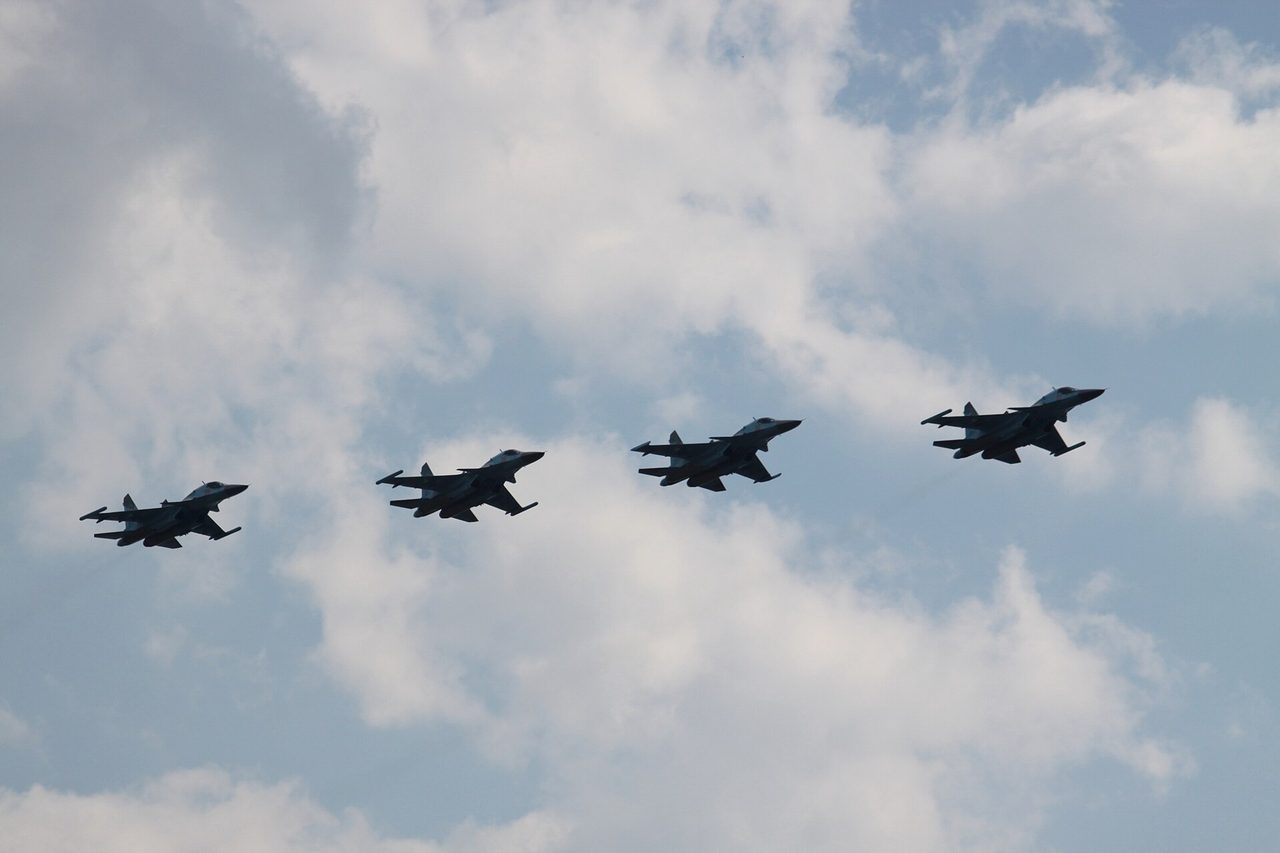
Photo: Aeroprints.com / CC BY-SA 3.0 · via Wikimedia Commons
Satellite Imagery Backs Ukraine's Claim of Six Su-34s Hit in Russia — and a $200 Million Bill
Ukraine's navy strikes a rear airfield with Neptune missiles
Overnight on October 14–15, Ukraine's Naval Forces hit the Borisoglebsk military airfield in Russia's Voronezh region with the Neptune coastal missile system. President Volodymyr Zelensky said an extended-range "Long Neptune" was used, a variant with a range of about 1,000 kilometers. The base sits roughly 370 kilometers from the front line and has served as a refuel-and-rearm stop for strike missions against Ukraine. Borisoglebsk hosts the 783rd Training Aviation Center and elements of the 105th Guards Mixed Aviation Division, which flies the Su-34, Su-35S and Su-30SM.
Six Su-34Ms destroyed or damaged in a single night
Ukraine's Navy said six Su-34M fighter-bombers were destroyed, along with ground support equipment, with secondary detonations and a fire at the base. Zelensky put the tally at four completely destroyed and two more hit, saying they "were ready to launch new attacks on Ukraine and were loaded with aerial bombs." The General Staff later confirmed all six were damaged to varying degrees. The Su-34M is a two-seat heavy fighter-bomber and Russia's principal carrier of UMPK glide bombs.
Satellite comparison settles on four written off
Satellite imagery now serves as the arbiter. AviVector analyzed Airbus Defence and Space commercial imagery: October 13 pictures showed six Su-34s parked where the strike landed; post-strike imagery showed four completely destroyed and two badly damaged, with two other marks identified as pre-attack engine-start traces. Reuters said it verified satellite imagery showing destruction at the airfield. Resolution is still too coarse to identify six individual wrecks, which is part of why accounts differ.
Moscow counts drones, not aircraft
Voronezh Governor Alexander Gusev said air defenses downed 33 drones and "several jet-powered aerial targets," with falling debris damaging outbuildings at several homes and a car in Voronezh city. Russia's Defense Ministry said 166 Ukrainian drones were intercepted over 14 regions that night. Russian officials have issued no confirmation of aircraft losses at the base. The pro-war Telegram channel Voyenny Osvedomitel, citing the same satellite images, said that "in the worst-case scenario, as many as three to four Su-34 bombers parked at the epicenter of the explosion may have been lost, while two more may have been damaged."
Where the $200 million figure comes from
The $200 million is an accounting result, not an official number. The open-source intelligence platform GlobalMilitary.net estimates the average Su-34M at about $36 million, putting six aircraft near $216 million. Newsweek built its figure on previous Ukrainian military estimates of up to $50 million per aircraft — four written off comes to about $200 million. Either way, the burned-out parking apron runs into hundreds of millions.
Why the Su-34 matters: glide bombs
Russia bolts UMPK glide-and-guidance kits onto Soviet-era FAB bombs, and Su-34s release them from outside the reach of many Ukrainian air defenses, at ranges beyond 60 kilometers. A Royal United Services Institute assessment identifies the Su-34 fleet as central to Russia's mass employment of FAB-500, FAB-1500 and even FAB-3000 weapons. Since this year each Su-34 has been able to carry six glide bombs rather than four. EUobserver did the arithmetic: losing six aircraft — damaged jets cannot fight either, at least temporarily — means at least 36 fewer precision-guided bombs against Ukrainian positions every day.
Russia's 2026 deliveries cannot cover one night
Russia's United Aircraft Corporation handed over only its second Su-34 batch of 2026 on October 7, without disclosing numbers; analyst Guy Plopsky estimates up to four aircraft. Defense Express counted at least three Su-34s destroyed or damaged earlier this year, bringing the 2026 total to at least nine. UNN says Russia may have received only four to five new Su-34s in 2026, though other estimates put annual output near 30; 18 arrived in seven batches during 2025. Britain's Ministry of Defence assesses Russia has lost more than 100 aircraft since February 2022.
Kyiv promises its long-range campaign will continue
Ukraine's Navy said the strike "significantly weakens Russia's air capabilities and reduces the intensity of tactical aviation operations." Zelensky was blunter: "Russia is dragging out the war, therefore our long-range operations will continue." EUobserver called it the Russian air force's worst day since Operation Spiderweb in 2025.
A refinery and a bank data centre hit the same night
The airfield strike was not isolated. The same night, Ukraine resumed long-range strikes on Russian oil refineries, hitting the Ryazan refinery after a pause, and reports said Sberbank's main data centre in Balakovo was struck, disrupting banking services. Kyiv frames such targets under one logic: pushing the cost of the war back onto Russia.
What to watch: hardened shelters and reprisals
Three things to watch. First, whether Russia protects rear airfields with hardened shelters, decoys and dispersed parking — homework left undone after earlier attacks. Second, whether the Long Neptune can sustain a threat to deep airfields, given finite missile stocks. Third, how Moscow retaliates: Russia has repeatedly hit Ukrainian cities and energy infrastructure in recent weeks, and each Ukrainian success deep inside Russia tends to draw a reprisal wave.
Sources
- Ukraine Says It Damaged Six Russian Military Jets in Missile Strike on Airfield
- Newsweek: Satellite Images Show Su-34 Destruction Costing Russia $200 Million
- Kyiv Independent: Ukraine hits 6 Russian Su-34 bomber jets with Neptune missile, military says
- The Moscow Times: Ukraine Says Missile Strike Destroyed 6 Russian Warplanes at Voronezh Airfield
- Ukrainska Pravda: Zelenskyy: Ukraine has destroyed four Su-34 bombers in Voronezh Oblast with Neptune