China Moves to Curb Exports of AI, Chip Designs and Solar Know-How
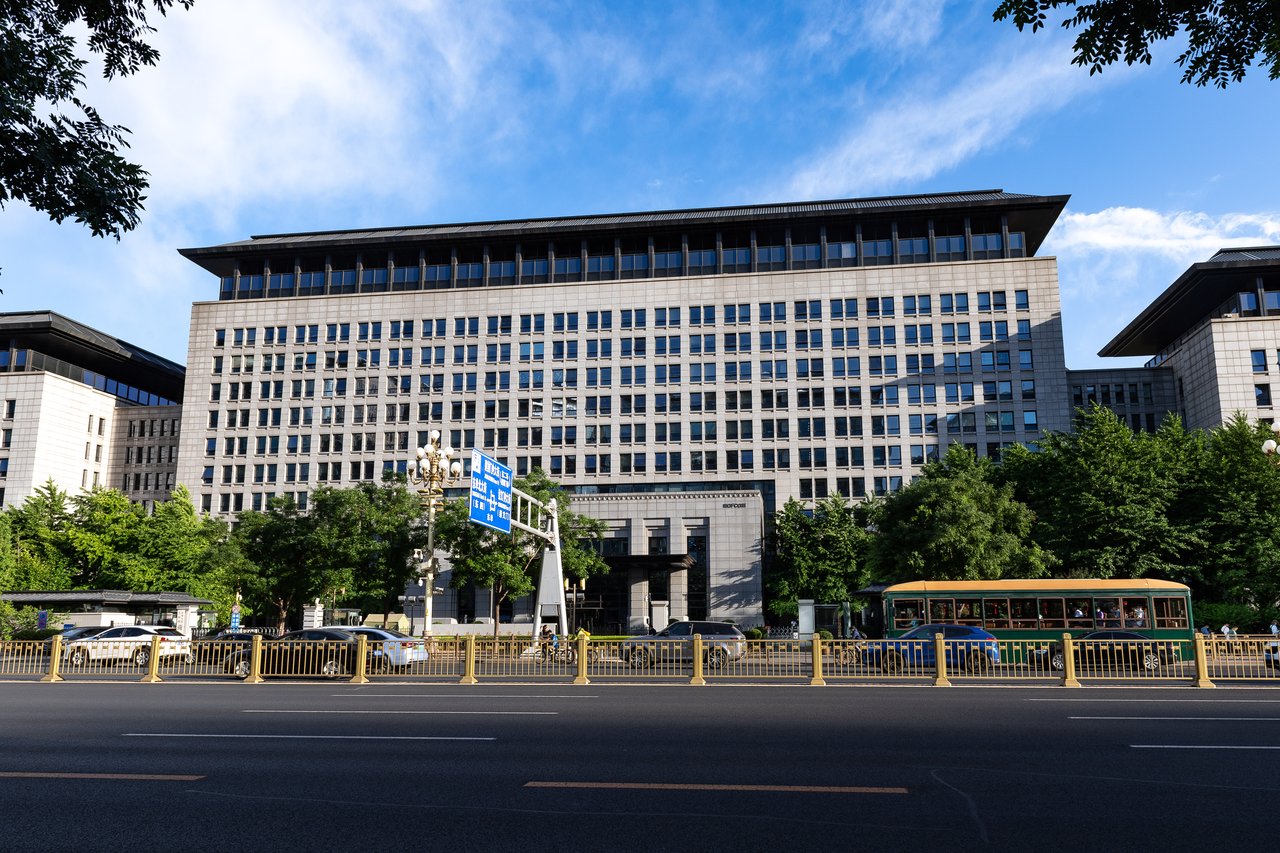
Photo: N509FZ / CC BY-SA 4.0 / Wikimedia Commons · via Wikimedia Commons
China Moves to Curb Exports of AI, Chip Designs and Solar Know-How
Beijing adds 40 technologies to its export catalogue
China's Ministry of Commerce and Ministry of Science and Technology issued Announcement No. 48 of 2026 on Friday, publishing a draft revision of the national catalogue of technologies banned or restricted from export and opening it to public comment. The draft would add 40 technologies across artificial intelligence, biomedicine and solar power, and from the day of publication exporters must register covered technology transfers before shipping them abroad.
Fourteen items face bans, 26 need licences
The 40 entries split into two tiers. Fourteen would be prohibited outright, including AI-driven malicious code generation and mutation technology, proprietary cell and gene therapy process platforms, and perovskite and tandem solar-cell module manufacturing. The remaining 26 would be restricted, meaning exports need a licence: among them AI-assisted vulnerability discovery, novel target discovery and validation for universal cell and gene therapies, and polysilicon engineering for lines with annual capacity of at least 30,000 tonnes.
Models, agents and clusters make up 23 AI entries
Broken down by sector, 23 entries are AI — large models, AI agents, computing clusters and information processing. Five are biomedical, covering cell and gene therapy, small nucleic acid drugs and pathogenic microorganisms. Twelve are photovoltaic, spanning polysilicon, wafer and cell manufacturing, with controls extending to the key and core equipment that carries the technology.
Two trillion parameters and a global top-10 ranking
Bloomberg reported that restricted model technology includes weights, checkpoints, source code, architecture and training or inference methods. Controls trigger when a model is trained on "important data", reaches 2 trillion parameters, hits 10^26 FLOPs of training compute, or ranks in the global top 10. Reports named Moonshot's Kimi K3 and Alibaba's Qwen3.8-Max as models exceeding 2 trillion parameters, though the draft names none. Chip design know-how for AI chips made at 14 nanometres or finer, or using 2.5D or 3D advanced packaging, is also listed, as are designs for some advanced memory. Core technology for AI agents built for highly sensitive settings such as national defence and critical information infrastructure would be banned.
Commerce Ministry cites defence and infrastructure risk
A ministry spokesperson said the malicious code technology in scope could be used to attack critical information infrastructure, defence and core government systems, and that if obtained by non-state or malicious actors it could harm national and human security. The stated aims are to solidify the security baseline, prevent misuse and abuse, keep AI under human control and advance international AI governance. The announcement stressed the revision is routine work that targets no specific country, region or entity.
Washington's chip controls cast a long shadow
US-led restrictions have blocked China from the world's most advanced AI chips and the machines that make them. Foreign media reported in July that Chinese authorities had discussed curbs on overseas access to the country's most advanced models, including unreleased ones, with Alibaba, ByteDance and Z.AI. China also ordered Meta in April to unwind its roughly $2 billion acquisition of AI agent startup Manus. Analysts widely read the draft as Beijing mirroring Washington's export-control toolkit.
Alibaba, Moonshot and PV exporters first in scope
If adopted as written, model developers with frontier-scale systems would need to register, and potentially license, any transfer of weights or source code; chip designers face the same for sub-14-nanometre and advanced-packaging know-how. On the solar side, overseas licensing, production-line installation, commissioning and equipment exports tied to perovskite, tandem and large-capacity polysilicon technology would enter the licensing process, though direct exports of finished cells and modules are not immediately affected. Projects to build plants abroad could slip and compliance costs rise. In biotech, ownership transfers of cell and gene therapy platforms tighten, while out-licensing deals that do not transfer ownership still qualify for automatic licensing.
Comment window closes on November 15
Public comment runs from October 16 to November 15, giving companies, trade groups and foreign governments one month to respond by email, fax or letter. Until the catalogue is formally revised, the interim registration rule already applies to transfers of technology ownership, licences for overseas use, and changes of owner or actual controller to a foreign entity. Exports already under way but not completed are covered too, and filings go through the Commerce Ministry's unified business platform.
Open source and API access stay out of scope
The ministry said technology already in the public domain through open source or published papers is excluded, and that open-source exports, companies running their own overseas computing centres and overseas chip fabrication enjoy streamlined procedures that are effectively "register and go". Serving overseas users through API calls, apps, web interfaces, SaaS products or lightweight on-device deployment is not treated as exporting large-model technology; only overseas localised deployment falls inside the rule, and deploying on a company's own overseas cloud may still qualify for automatic licensing. Once the measures take effect, the spokesperson said, the vast majority of AI technology will remain freely exportable.
Sources
- Associated Press
- Reuters
- Bloomberg
- Xinhua
- CNBC