Two Chicago lawsuits accuse delivery robots of scanning faces and sharing biometric data
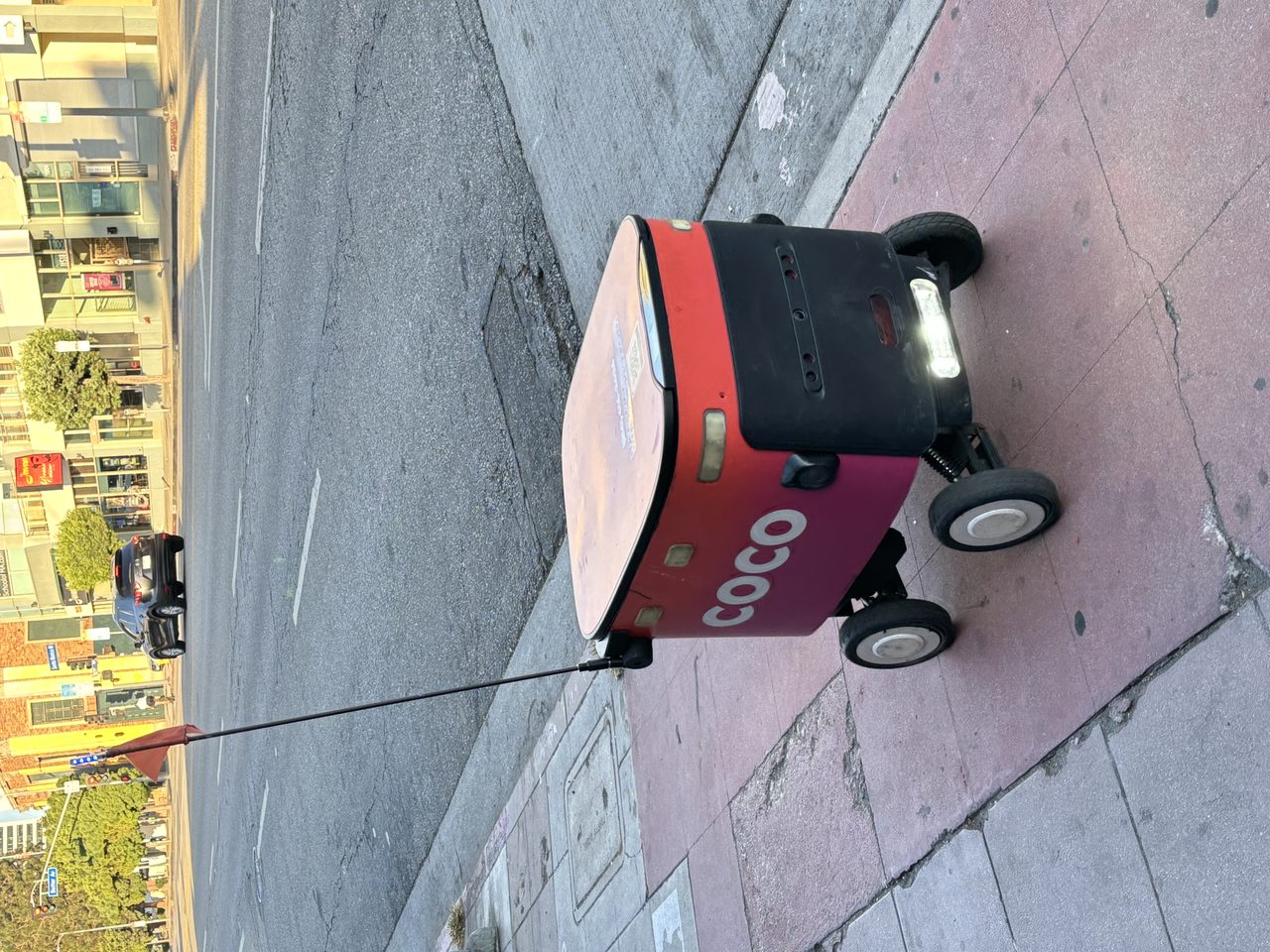
Photo: CC0, via Wikimedia Commons · via Wikimedia Commons
Delivery Robots Are Reading Your Face, Two Chicago Lawsuits Allege
Two class actions target Coco and Serve Robotics
Two proposed class actions filed Oct. 9 in Cook County Circuit Court accuse Coco Robotics and Serve Robotics of violating the Illinois Biometric Information Privacy Act by scanning customers' faces and hands as they collect food orders, retaining the data to train the companies' own AI models and sharing it with third parties. Both companies deny the allegations.
The plaintiffs are customers who ordered by robot
Mitchell Breidinger, who lives on the Near North Side, sued Coco; Barry Schain, who lives in Lincoln Park, sued Serve. According to the complaints, live video of Breidinger receiving his order was viewed by a Coco remote pilot and transmitted to third parties including OpenAI, while Schain's footage went to parties that "have processed Mr. Schain's biometric identifiers for their own purposes." Neither consented, the complaints say, and both would have refused robot delivery had they known their data would be recorded and sent elsewhere. The proposed classes cover anyone in Illinois who since 2022 received an order delivered by a Coco or Serve robot and was recorded by its cameras or LiDAR.
The complaint says LiDAR measures face geometry
The suits describe infrared laser sensors measuring the three-dimensional geometry of faces and hands: the distance from the sensor to the tip of the nose, the bridge of the nose, cheekbones, brow, chin and jaw. "A person's biometric information is a core part of who they are," plaintiffs' counsel David Almeida and Lucas Coughlin wrote in a joint statement, adding that with advanced AI systems able to identify and track people by their biometric features, the risk of losing privacy is hard to dismiss.
The companies say the data only steers the robots
Coco said it has not yet been legally served. Carl Hansen, its head of government relations, said the lawsuit "fundamentally misunderstands our technology," that the company has not collected biometric data in Chicago and has therefore never shared any with third parties, and that he is confident the "frivolous lawsuit will go away." Coco also said it does not use LiDAR at all in the city. Serve said it will defend against the complaint: its robots "use cameras and sensors to navigate the sidewalks of Chicago safely," and "Serve does not use that data to identify individuals and our systems are not designed to identify individuals or create biometric profiles."
BIPA is the strictest biometric privacy law in the U.S.
Illinois' Biometric Information Privacy Act requires written notice and a written release before a company collects facial geometry or other biometric identifiers. It gives individuals a private right of action without having to prove actual harm, with statutory damages of $1,000 for each negligent violation or $5,000 for each intentional or reckless one. The lawsuits seek those damages, plus court orders requiring compliance and payment of attorney fees.
A 2024 amendment and an April ruling narrowed the exposure
Illinois amended BIPA in August 2024 so that repeated collection of the same identifier from one person by the same method counts as a single violation. In April 2026, the U.S. Court of Appeals for the Seventh Circuit held in Clay v. Union Pacific Railroad Co. that the amendment applies retroactively to pending cases. The fight now turns less on how many scans occurred than on whether navigation data counts as a biometric identifier at all.
Chicago's robot pilot expires in May 2027
Chicago's delivery robot pilot was established by the City Council in 2022. Coco was licensed in November 2024, and Serve launched in September 2025; Bloomberg Law reports Serve has operated in 14 Chicago-area neighborhoods for Uber Eats and Grubhub. The pilot expires in May 2027 unless the Council ends or extends it earlier. Ald. Daniel La Spata declined in February to extend Serve's reach in his North Side ward.
Robots have already smashed bus shelters
The lawsuits land amid accumulating frustration. In March 2026, robots from Serve and Coco smashed glass panes at CTA bus shelters in West Town and Old Town within days of each other. In September, video of more than a dozen Coco robots clogging a sidewalk near Lincoln Park drew more than 300,000 views; Coco blamed a "sidewalk deployment error" and apologized. Petitions have called on the city to pause the pilot.
In Philadelphia, a 78-year-old professor was arrested
The friction has flared differently in Philadelphia. On Oct. 14, Carolyn Marvin, 78, stood in front of an Uber Eats robot on the 1200 block of Filbert Street near Reading Terminal Market and refused to move. Police said she repeatedly blocked the robot's path and ignored officers' commands; she was arrested and charged with disorderly conduct. Marvin, a retired University of Pennsylvania professor, said she had been doing this for months.
She calls blocking robots protected speech
Marvin said she was protesting automation taking human delivery jobs. "I know they're taking the jobs of human delivery workers," she said, adding: "I think it's my First Amendment right to publicly demonstrate on a sidewalk to protest against delivery robots." She plans to contest the charge on First Amendment grounds and to keep protesting.
Who is affected
Customers and passersby may have been scanned without knowing it; delivery riders face diverted orders; for the companies, Serve reports roughly 20 cities and more than 4,500 merchant partners, so a successful claim could reach a large class; and the city must weigh privacy alongside safety, accessibility and jobs as it decides the pilot's future in 2027.
What happens next
The Cook County cases move into service and briefing, where dismissal motions will test whether navigation data equals a biometric identifier. Legislative moves in Chicago and the outcome in Philadelphia will help decide who pays the privacy cost of robots on the sidewalk.
Sources
- Block Club Chicago
- Chicago Sun-Times
- Chicago Tribune
- Chicago Focal
- ABC7 Chicago