Twelve Ships in Seven Days: Hormuz Attacks Hit a Wartime Record as Brent Touches $110
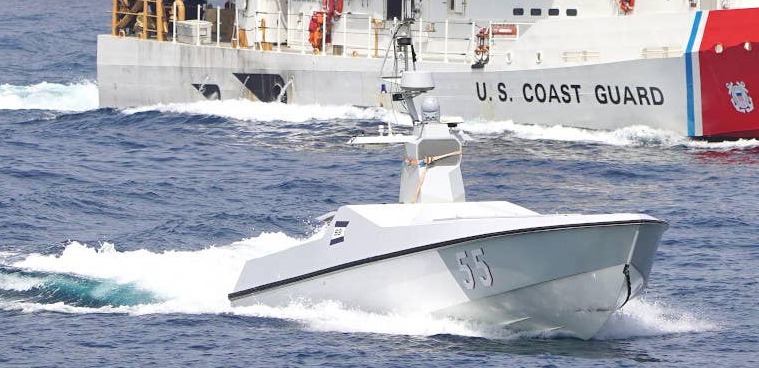
Photo: USN / Public domain · via Wikimedia Commons
Twelve Ships in Seven Days: Hormuz Attacks Hit a Wartime Record as Brent Touches $110
Twelve attacks in a week, and another twelve behind it
BBC Verify's analysis of UK Maritime Trade Operations (UKMTO) data counted twelve vessels attacked in and around the Strait of Hormuz between 5 and 11 October, up from ten the week before. Six were struck on 11 October alone, the highest single-day tally since the war began on 28 February. UKMTO logged another twelve incidents in the seven days to 16 October — ten inside the strait, one each in the Arabian Gulf and Gulf of Oman — making 23 attacks since 1 October, close to double the monthly average since the war started. The New York Times puts the toll higher still, at 26 vessels struck so far this month.
Two hulls lost, every crew member evacuated
The Singapore-flagged container ship GFS Pride was hit, caught fire, listed and sank under tow. All 21 crew of the 2,824-TEU vessel were evacuated with no injuries, Singapore's Maritime and Port Authority confirmed. The Antigua-flagged bulk carrier Cape Dao, struck earlier, sank after a failed salvage attempt. By the International Maritime Organization's count, they are the second and third ships lost since 28 February.
Tehran says the strait is closed to shipping
An IRGC spokesman, Mohebbi, rejected Washington's account outright: "The Strait of Hormuz is closed, and what the Americans claim about it being open does not correspond to existing reality." He dismissed the traffic that does move as a handful of small vessels slipping through at night at enormous cost and risk. Mohammadreza Naqdi, an adviser to the IRGC commander, has said the waterway is under Iran's "full dominance" and will stay shut until Tehran's conditions are met. Iran's security chief Mohsen Rezaei was blunter: "You are smuggling, but the strait is under Iran's control."
Centcom calls the closure claim false
US Central Command answered point by point, calling the Iranian claim "FALSE" and insisting that commercial and energy traffic — including 20 million barrels of crude — was flowing "right now." It added that "the United States and regional partners clearly control the strait." Centcom also disputed Tehran's account of the GFS Pride, saying an IRGC projectile rather than a mine struck the ship, and that more than 40 commercial vessels transited in the previous 24 hours. To the IRGC navy commander's threat to sink American warships, its reply was: "The IRGC's navy commander has no navy."
Iran is squeezing the corridor Washington promised to keep open
The US military has increased the number of tankers it shepherds through the southern part of the strait, and that has loosened Iran's grip on the route. Tehran's answer has been volume rather than precision: near-daily, sometimes multiple strikes a day. "The aim here is to stop the ships going through and to deter others," Martin Kelly, chief executive of Orbital Risk Intelligence, told the BBC, describing a force that has "evolved its strategy". A second clock is domestic politics: the 3 November US midterms, with petrol prices already a vulnerability for the White House — every new attack gives crude another reason to climb.
Insurance now costs a tenth of a tanker's value
Brokers put Hormuz war-risk cover at 6-10 per cent of a hull's value, so a supertanker can pay up to $20 million for a single Gulf voyage. Pre-war cover cost at least $100,000; now roughly $3 million from Yanbu, up to $7 million from ports further south or through Hormuz. Premiums run in seven-day windows, reviewed every 24 hours — each attack is priced into the next invoice almost immediately.
Flows are down a quarter, and Brent touched $110
Kpler data show about 12.6 million barrels a day moving through the strait on 13 October, down from roughly 15 million at the end of September and around 17 million before the war, a fall of about a quarter. Prices followed. Brent touched $110 a barrel on 16 October, its first trip to that level since May, and settled at $109.86, up 3.7 per cent and its highest close since 19 May. West Texas Intermediate ended at $101.41, up 3.5 per cent. Over the week Brent gained 4.9 per cent and WTI 10.4 per cent.
The bill lands on crews and Asian buyers
On 6 October the Panama-flagged tanker MT On Peace was hit by a projectile off Oman: of its 19 crew, 17 were Indian, 12 were injured, and the wounded were taken to Khasab, Oman. India's foreign ministry condemned the attack. The IMO's tally is now 100 commercial ships attacked and at least 24 seafarers killed since the war began, and Secretary-General Arsenio Dominguez has urged ships to avoid the area altogether. Asian refiners absorb the difference: pay more at the berth, or reroute through Saudi Arabia's Red Sea port of Yanbu, itself now covered by missile intercepts.
Talks stall on sanctions and the blockade
Iran's leverage is transit, and its price is explicit: lift the naval blockade, ease oil sanctions and extend a ceasefire to Lebanon, and the strait can reopen within seven days. The proposal was passed to Washington through Qatar in late September; President Donald Trump rejected it publicly. US Ambassador to the UN Mike Waltz said Tehran was "asking for everything up front, with a promise that they would then talk." Foreign Minister Abbas Araghchi says the conditions are clear and will not be traded away.
Three numbers to watch this week
The first is UKMTO's weekly attack count — another double-digit week means escorts are not setting the tempo. The second is Kpler's daily flow figure, nearing 12 million barrels; below that, crude's next round number is close. The third is the war-risk rate, which captures shipowners' judgement faster than any official statement. The IMO's avoid-the-area advice may improve the data for the wrong reason: fewer ships willing to sail.
Sources
- BBC News
- Al Jazeera
- CBS News
- Reuters
- CNBC