Turkey's Kekova Wreck May Be the World's Oldest Ship—If the Pottery Is Right
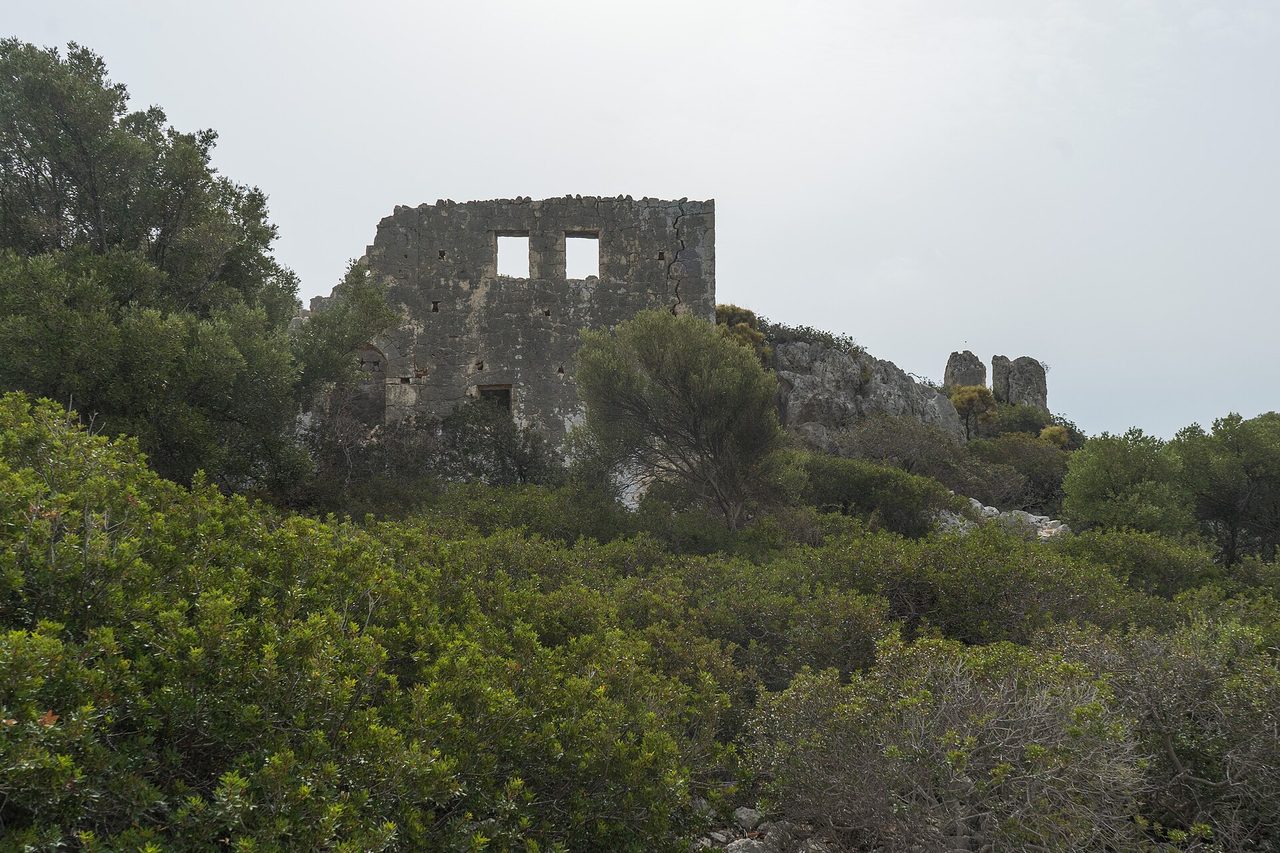
Photo: Alexkom000 / CC BY 4.0 · via Wikimedia Commons
Turkey's Kekova Wreck May Be the World's Oldest Ship—If the Pottery Is Right
Thirty jars, three anchors, thirty metres down
Off the shore of Kekova Island in Antalya province, southern Turkey, more than 30 ceramic storage jars and three large stone anchors lie scattered across an underwater slope about 30 metres down. Nothing of the ship's wooden hull survives. Excavators describe a small sail-powered vessel roughly 10 metres (33 feet) long, carrying cargo across the eastern Mediterranean when it went down. Hakan Öniz told CNN the wreck was first found four years ago; New Scientist says the team first saw it during a 2024 survey — the two accounts do not match.
Turkey's culture minister called it the world's oldest
On 14 October, Culture and Tourism Minister Mehmet Nuri Ersoy announced on social media that Turkey had brought "traces of the world's oldest shipwreck" to light in its "Blue Homeland" waters. The ministry's statement dated the jars to between 4,400 and 4,700 years ago.
With no timber left, the date rests on pottery
No wood means no radiocarbon dating. Instead the team analysed the jars' form — two handles, a ridge at the middle, a flat base — and matched them with already dated pottery from Egypt and the Middle East, placing them around 2700–2400 BCE, in the Early Bronze Age, roughly when the Great Pyramid was being built. "Comparing the decoration techniques… we can definitely say our wreck is Early Bronze Age. This is 100%," Öniz told the BBC.
An outside expert wants the published evidence first
Jon Henderson of the University of Edinburgh calls the find "fascinating and potentially very important" but says he would like to see published evidence before "crowning it the world's oldest shipwreck", noting that dating by pottery comparison is not always accurate and that radiocarbon data would help — except no organic material survives at the site. Öniz says the team is "generally confident", pointing to the stone anchors as well as the jars.
It would displace a wreck off the Greek island of Dokos
The record currently belongs to a wreck off Dokos in southern Greece, dated to about 4,200 years ago, found in 1975 and excavated systematically between 1989 and 1992. If the Kekova dating holds, it is several centuries older. The oldest known intact wreck, with its timber preserved, is a roughly 2,400-year-old hull in the Black Sea off Bulgaria. Nor is this the first such claim in Turkish waters: in 2024 Turkish media described a 3,600-year-old wreck off Antalya as the world's oldest.
Some jars still hold a glossy black residue
Karin Sowada, an Egyptologist at Australia's Macquarie University, was invited to examine the jars and found a viscous, glossy material, with hardened black residues, still inside several of them. "I looked inside and nearly fainted," she told the BBC. The original cargo may have been olive oil or wine; tree resin, dried meat or dried fish are also possibilities. Researchers are using X-ray fluorescence and X-ray diffraction to study the fabric and the contents. Sowada cautions that large jars were reused over many years, so the residue may not be the original cargo.
A nine-marked jar with two holes hints at dairy at sea
One jar carries nine distinct markings and two holes through its body. Preliminary examination suggests it may have been a churn used to make butter or cheese, raising the possibility that crews kept live goats aboard, milked them during long voyages and processed dairy products at sea.
Fired in the Jordan Valley, sailing west toward Troy
Clay analysis suggests the jars were produced in workshops in the Jordan Valley. Researchers believe the ship left a port on the Levantine coast and headed west for Troy, in what is now north-western Turkey, or for Crete when it sank near Kekova. Comparable jars have been found at Giza, Saqqara and Abusir in Egypt and at Troy and in Crete, pointing to a wide exchange network. Preliminary findings appeared in the Journal of Maritime Archaeology.
The finds will go to a new Antalya underwater museum
The wreck belongs to Turkey's Ministry of Culture, and the recovered artefacts are undergoing conservation before going on display at the new Mediterranean Underwater Archaeology Museum in Antalya, due to open in the coming months. Öniz told Anadolu Agency that more than 430 wrecks have been documented along Turkey's Mediterranean coast; most are Roman or Byzantine, and only three are Bronze Age.
More diving and lab work still ahead
Excavations began in 2026 under the Antalya Museum Directorate, after Akdeniz University surveys identified the site. The authors write that further remains are likely to be uncovered in planned work at present and deeper points of the partly sandy, partly rocky seabed. The date still has to be confirmed in the laboratory; even if the title shifts again, the cargo already documents trade across the eastern Mediterranean nearly five millennia ago.
Sources
- BBC
- CNN
- New Scientist
- The Art Newspaper
- Smithsonian Magazine