China's Petrol Car Sales Halved in September as EV Share Hit a Record 67%
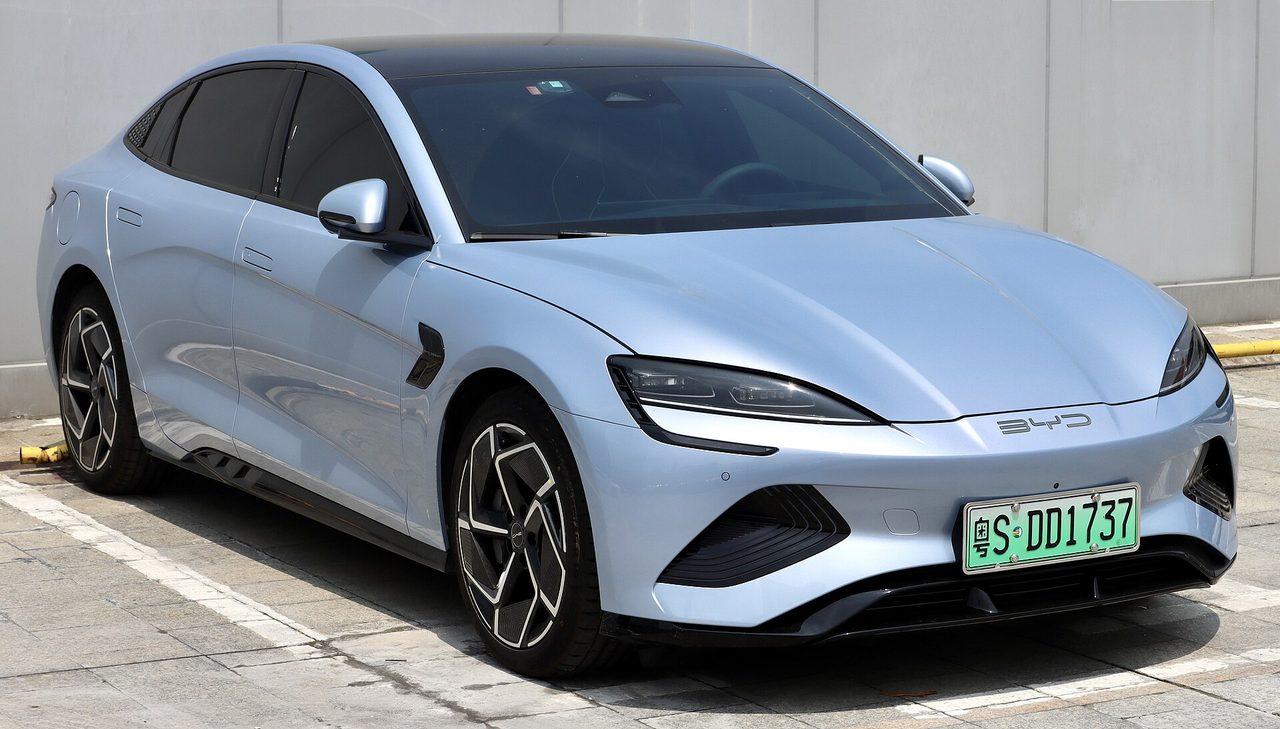
Photo: User3204 / CC BY-SA 4.0 · via Wikimedia Commons
China's Petrol Car Sales Halved in September as EV Share Hit a Record 67%
Golden September Never Arrived
China's passenger vehicle retail sales came in at 1.618 million units in September, down 28.0% year on year and up only 5.0% from August, according to the China Passenger Car Association (CPCA). It was the twelfth straight month of annual decline and the steepest monthly drop so far this year — the traditional "Golden September" peak season simply did not show up (Gasgoo, Just Auto).
A Record 67% Share in a Shrinking Market
NEV retail sales reached 1.084 million units, down 16.7% year on year but up 7.8% from August. Their share of passenger vehicle retail sales hit a record 67.0%, up 9.1 percentage points year on year and 1.7 points from August. Notably, this was the ninth consecutive month of annual decline in NEV retail volumes: the record was set not by selling more, but by petrol cars selling far less (CPCA data via CnEVPost).
Petrol-Only Sales Fell 49%
By powertrain, pure internal combustion engine retail sales crashed 49% year on year, while non-NEV sales overall — a category that includes conventional hybrids — fell 43%. Conventional hybrids actually rose 25%. Non-NEV retail sales fell 47% for Chinese brands, 42% for mainstream joint ventures and 41% for luxury brands (CPCA via Gasgoo).
CAAM Reads the Market Differently
The China Association of Automobile Manufacturers (CAAM) counted 2.956 million vehicles sold in September, down 8.4% year on year but up 9% from August. NEVs accounted for 1.823 million units, up 13.6%, or 61.6% of total sales — the third straight month above 60% (CAAM, China Daily).
BEVs Grow, PHEVs Stall
Within the NEV category, battery electrics did the work. CAAM reported a record 1.277 million BEVs sold in September, up 20.7% year on year, while plug-in hybrids were flat at 546,000 units (CnEVPost, electrive). On the retail measure used by CPCA, BEVs still fell 7.38% to 765,000 units, with growth confined to wholesale.
High Fuel Prices Are Forcing the Switch
The CPCA singled out high fuel prices as a major drag on petrol demand. On September 25 the National Development and Reform Commission raised petrol prices by 395 yuan per tonne, well below the 830 yuan the pricing mechanism would have produced. Petrol prices are up about 2,375 yuan per tonne this year (SMM, Reuters). China's gasoline consumption fell 6% in the first nine months, according to Energy Aspects.
Exports Carry the Industry
Passenger vehicle exports rose 73.7% to 917,000 units in September, with NEV exports jumping 163.5% to 558,000 and accounting for 60.8% of the total. CAAM put total vehicle exports at 1.053 million units, up 61.4%, of which 571,000 were NEVs — more than half for a fourth consecutive month. BYD's overseas sales rose 154% while its domestic sales fell 13%; Geely's overseas volume climbed 162% as its home sales dropped 20% (Automotive World).
Winners and Losers in the Rankings
BYD led domestic retail with roughly 247,000 units and a 15.3% share, despite a 28.9% decline. Geely followed with about 177,000 units, down 24.0%, and Chery with some 86,000 units, down 28.9% (CPCA via Gasgoo). On NEV retail, BYD held 22.8% share, Geely 11.0%, Leapmotor 7.2% and Tesla China 6.0% (CnEVPost). The Model Y was September's best seller with 50,359 deliveries, down 2% year on year (CleanTechnica).
Subsidies Are Being Rolled Back
The purchase tax exemption became a capped 50% discount in January, and from April 1, 2027 the VAT export rebate on NEVs drops from 13% to 9% (Ministry of Finance, China Daily). Deutsche Bank estimates the change will cut BYD's net profit by about 5,000 yuan per exported vehicle (CnEVPost).
No Strong Bounce in October
The CPCA expects consumption sentiment to stay weak in October and sees NEV penetration holding above 65% if oil prices remain elevated (CnEVPost). CleanTechnica projects that, at this pace, China's market will be fully electrified around 2030.
Sources
- CnEVPost: 中国9月新能源零售下滑16.7%、渗透率创新高67%(乘联会数据)
- CleanTechnica: ICE Vehicle Sales Crash 49%(!) While EV Share Jumps to 67%(!)
- China's September passenger vehicle market: Retail sales slump, exports cushion wholesale decline
- China's NEV share of new car sales climbs to record 61.6% in September
- Just Auto: China's PV retail sales plunge 28% in September