Intel Installs First Major Truss at Delayed Ohio Chip Fab, Project at Least Five Years Behind
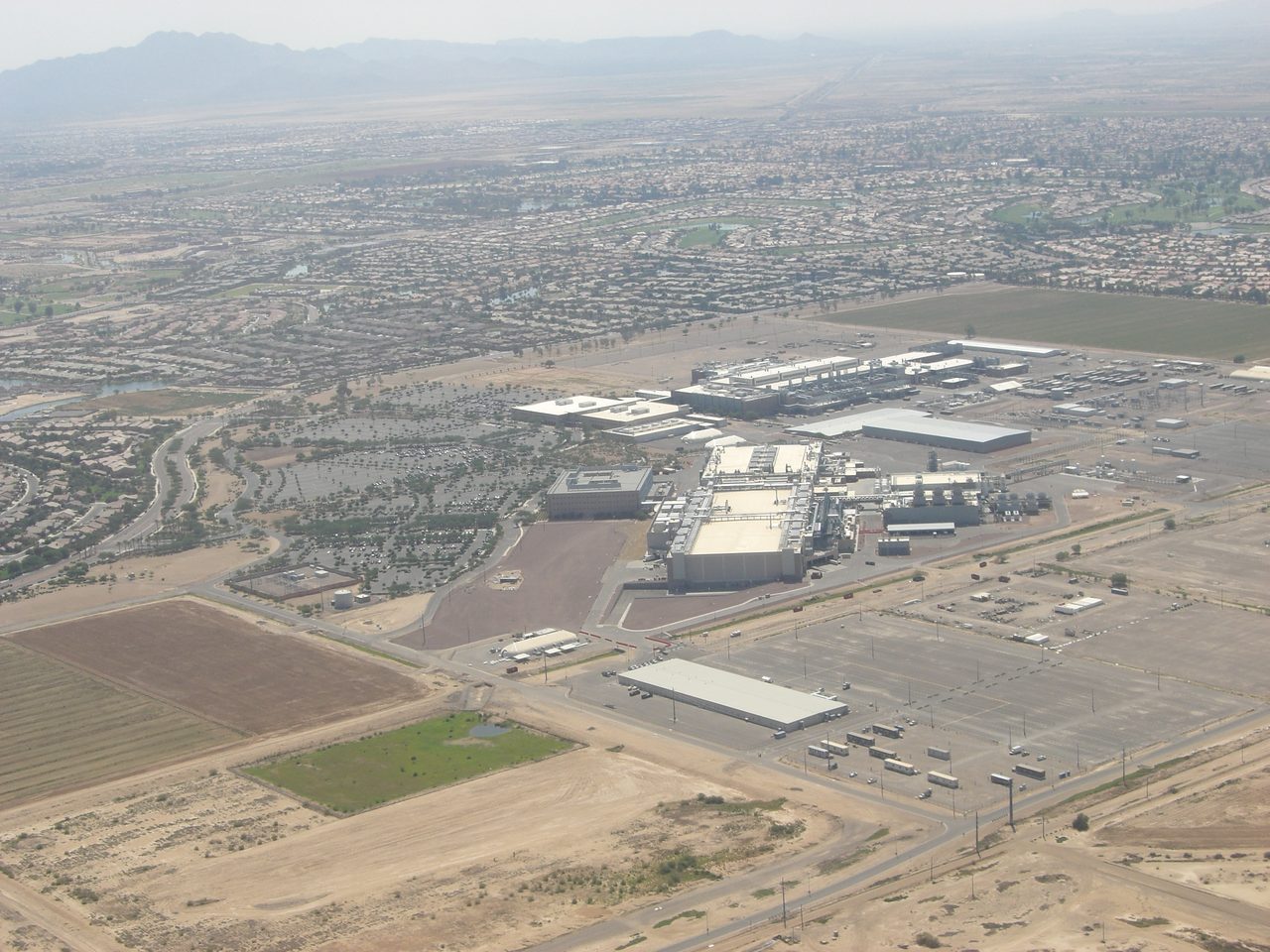
Photo: neepster / CC BY-SA 2.0 · via Wikimedia Commons
Intel Installs First Major Truss at Delayed Ohio Chip Fab, Project at Least Five Years Behind
First Major Truss Goes Up, Moving Ohio One Into Next Construction Phase
Intel announced Wednesday that crews installed the first major structural truss at its Ohio One semiconductor manufacturing complex in New Albany, Ohio. Naga Chandrasekaran, who leads Intel Foundry, wrote in a post on the company's website that the milestone "represents another significant step toward expanded U.S. leading-edge semiconductor capacity" and means the next part of construction has begun. The project, announced in 2022 for a site just northeast of Columbus in Licking County, was originally expected to start shipping chips in 2025. Intel now aims to finish construction of the first fab in 2030, with operations beginning between 2030 and 2031; a second fab is slated for completion in 2031, with operations starting in 2032.
Official Line: Keep Building, But Match the Pace to Demand
Intel's official framing is continued commitment to U.S. manufacturing, with construction paced to customer demand. The company has said it does not anticipate further delays after prior postponements, and reported investing about $1.4 billion in Ohio in 2025 while employing 162 people at the site, almost all Ohio residents. Under CEO Lip-Bu Tan, who took over in 2025, Intel further slowed work at the Ohio site to align spending with demand—a shift from the more aggressive expansion pursued under former CEO Pat Gelsinger. Chandrasekaran also noted that equipment installation is underway at Fab 62 in Arizona, with operations expected to begin by the end of 2028.
Why the Five-Year Slip
The delay tracks both the chip cycle and Intel's own strategy. Intel planned a 2025 start when it announced the project in 2022, then pushed the timeline back repeatedly. Tan's approach is to wait for customer orders before committing construction dollars, which has deliberately throttled Ohio One. At the same time, Intel's Arizona fab is already in high-volume production on its most advanced 18A process, but according to CNBC the company has not secured any significant third-party buyer for those chips and instead uses them in its own processors. Reports in September suggested memory maker SK Hynix might rent foundry capacity at the Ohio site, but neither company confirmed any plans.
Who Is Affected: Ohio Locals and U.S. Chip Self-Sufficiency
The most immediate impact falls on Licking County and New Albany, where slower construction delays jobs and supplier investment even as the site remains a cornerstone of the "Silicon Heartland" corridor. Nationally, Ohio One is a pillar of U.S. plans to rebuild leading-edge domestic chip capacity, and its slip leaves the country further behind rivals such as TSMC. The region's infrastructure is already being reallocated: Meta has reportedly explored using an AEP Ohio substation originally built to power the stalled Intel fab for a New Albany data center.
What's Next: The 2030 Node and Customer Proof
The next milestone is 2030: completion of the first fab, tool installation, and pilot production, followed by the second fab in 2031–2032. Intel still has to prove that its 18A and High-NA EUV capacity can win external foundry customers; without them, Ohio One lacks the order book to justify full ramp. Tan's demand-driven spending means the construction pace could still shift with order signals, but the first truss at least signals the project has moved from foundation work into above-ground construction.
Sources
- CNBC: Intel hits construction milestone at Ohio chip fab that's at least 5 years behind schedule
- Quartz: Intel installed the first major truss at its delayed Ohio chip plant
- Yahoo Finance: Intel's $28B Ohio Chip Project Hits Construction Milestone After Years Of Delays
- The Columbus Dispatch: New Albany chip plant hits milestone as Intel installs first structural truss
- Bloomberg: Intel Touts Factory Expansion Progress in Sign of Growing Demand