Futures Slide as AI Trade Cracks and Oil Tops $112
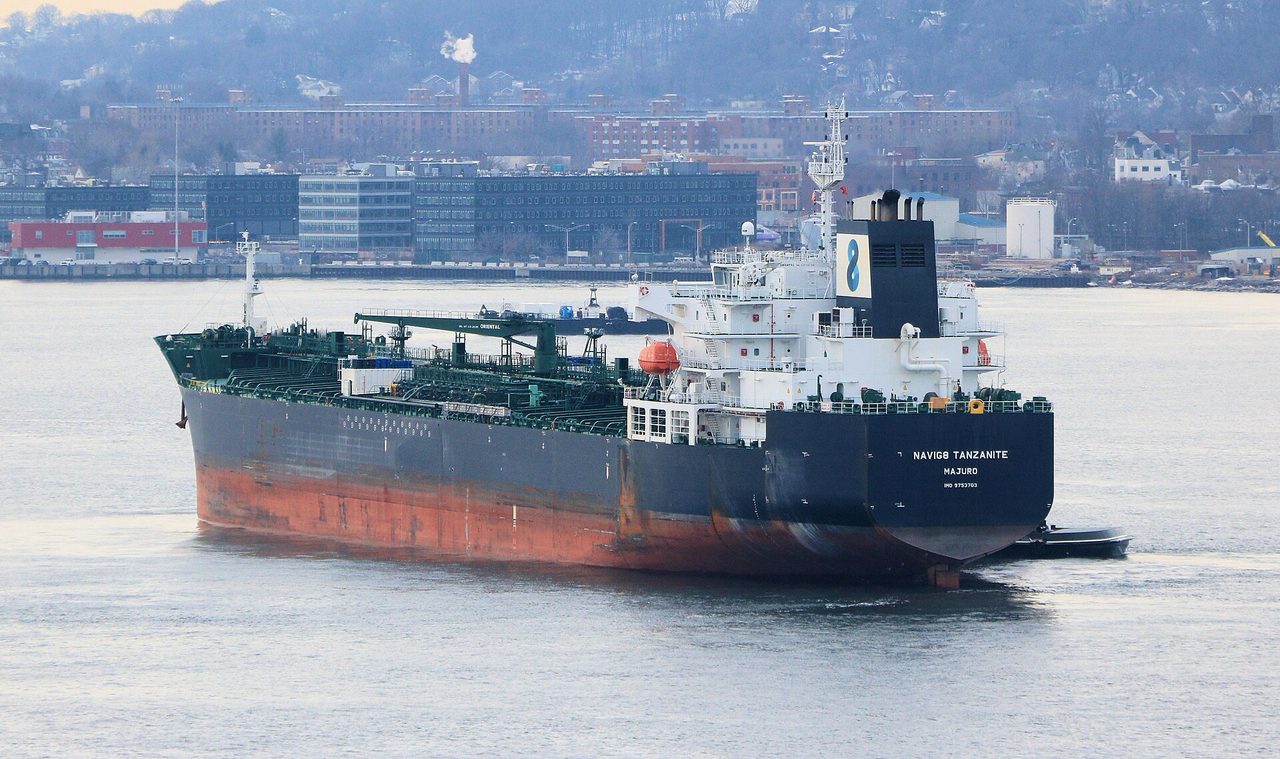
Photo: Paul Harrison / CC BY-SA 4.0 · via Wikimedia Commons
Futures Slide as AI Trade Cracks and Oil Tops $112
Nasdaq futures lead the drop
U.S. equity futures fell in Asian trading on Thursday, with Nasdaq futures down more than 1% and S&P 500 futures off 0.8% at one point in the session, before the drop widened to 1.7% for the Nasdaq. The reversal came a day after optimism returned on Wall Street, when strong results from SpaceX and Super Micro rekindled enthusiasm for AI-linked stocks. In premarket trading Thursday, SpaceX dropped 2.3% and Super Micro fell 4.7%, as investors shifted attention from how the numbers came in to how much those numbers cost.
Tesla's spending cut does the damage
Tesla fell 5.3% after it cut its annual capital expenditure forecast, raising questions about the pace of its AI and robotics expansion. The headline results were respectable: third-quarter revenue of $28.05 billion beat the roughly $27.9 billion consensus, adjusted earnings of $0.48 a share topped estimates of $0.43 to $0.45, deliveries reached 486,532, and total gross margin reached 19.6%, with automotive gross margin excluding regulatory credits improving to 18.1% from 16.3% in the second quarter. But on a GAAP basis, net income collapsed roughly 43% year over year to about $787 million, and operating income fell 56% to $718 million, compressing the operating margin to 2.6% from 5.8% a year earlier.
Cash flow turns positive, capex gets cut
The combination of cash flow and spending is what set off the reaction. Capital expenditure was $4.73 billion, down from $5.79 billion in the second quarter, and free cash flow reached positive $1.53 billion against a Wall Street expectation of a $4.92 billion cash drain. Tesla lowered its 2026 capital spending guidance to about $20 billion from more than $25 billion, with Chief Financial Officer Vaibhav Taneja saying the plan is to fund it primarily from cash flow from operations. The company also secured up to $30 billion in borrowing capacity during the quarter.
Meta beats, then stumbles on the new share class
Meta reported revenue of $64.60 billion for the quarter, up 26% from a year earlier and above the $63.33 billion consensus, with earnings of $3.83 a share versus $3.57 expected. Net income rose from $2.7 billion to $9.9 billion. Yet operating income fell to $13 billion from $20.5 billion a year earlier, missing the $16.9 billion analysts expected, because of a $9.9 billion legal settlement charge. Capital spending reached $34.91 billion in the quarter and free cash flow was negative $2.1 billion. Full-year capital expenditure guidance was narrowed to $135 billion to $145 billion from $130 billion to $145 billion, total expenses were lifted to $175 billion to $179 billion, and fourth-quarter revenue was guided to $73 billion to $76 billion. The bigger problem for the stock was structural: the board approved a new non-voting Class C share class, distributed to existing holders through a two-for-one split in January, so Meta can fund its AI build-out without diluting Mark Zuckerberg's roughly 61% voting control. Meta slipped 1.9% in Thursday trading after rising about 2% in the prior session's extended hours.
Oil clears $112 on Houthi attacks
Oil prices rose as Houthi strikes in Saudi Arabia escalated. Brent crude gained about 3% to trade above $112 a barrel, near a five-month high, while December WTI moved toward $100. Earlier readings showed Brent up 1.2% at $110.11 and WTI up 1% at $98.12, with the gains widening through the session.
A field strike and a diplomatic pullback
Debris from an intercepted drone targeting a processing facility at Saudi Aramco's Shaybah oil field killed two people and injured two others, and an attack on King Fahd Airport in Dammam killed two and left eight wounded. The field has the capacity to produce 1 million barrels of crude a day, though operations were unaffected. The United States ordered some diplomats and family members to leave its missions in the kingdom, and the State Department plans to withdraw families from other regional missions, US officials said.
Seven tankers afire in the Strait of Hormuz
Iran's state television reported that seven oil tankers caught fire and were damaged in the Strait of Hormuz, sending crude more than 2% higher. Supply data added to the strain: US crude stocks fell 3.06 million barrels to 412.5 million, against a draw of just 820,000 barrels expected in a Reuters poll, while distillates rose 1.68 million barrels to 104.3 million.
Bonds catch a bid, France gets sold
Investors fled into Treasurys and away from French government bonds, with the spread between 10-year French OAT yields and the equivalent German bond widening to 164 basis points, the highest since 2011. Ten-year OAT yields jumped 7.6 basis points to 5.085%, the highest since 2002.
Asian chips break first
South Korea's Kospi, the market most tightly tied to the AI trade, closed down 3.5%. Tokyo Electron fell 3.7% in early trading, Fujikura 2.8% and Ibiden 2.6%, while MiniMax dropped 6.8% and Z.AI 8.9% in China.
What happens next
The selloff is not about whether AI spending produces results, but about how fast. As one strategist put it, investors are not comfortable with oil rising above $110, and repeated new highs in energy are stagflationary. With the Fed's meeting next week and more megacap earnings due, the question for the AI trade is whether the market wants proof of monetization, or whether it will tolerate another quarter of heavy spending. So far on Thursday, it demanded the proof.
Sources
- Reuters: Nasdaq futures drop over 1% as AI worries resurface, oil climbs
- Associated Press: Asian shares retreat as report of damage to oil takers pushes oil prices higher
- CNBC: Stock market today: Live updates
- Morningstar: AI Stocks Slide After Earnings Disappoint; French Bonds Tumble and Oil Tops $112
- Bloomberg: Stock Market Today: Dow, S&P Live Updates for October 22