Bristol Myers Discloses Death in Autoimmune CAR-T Study as MS Data Show Early Promise
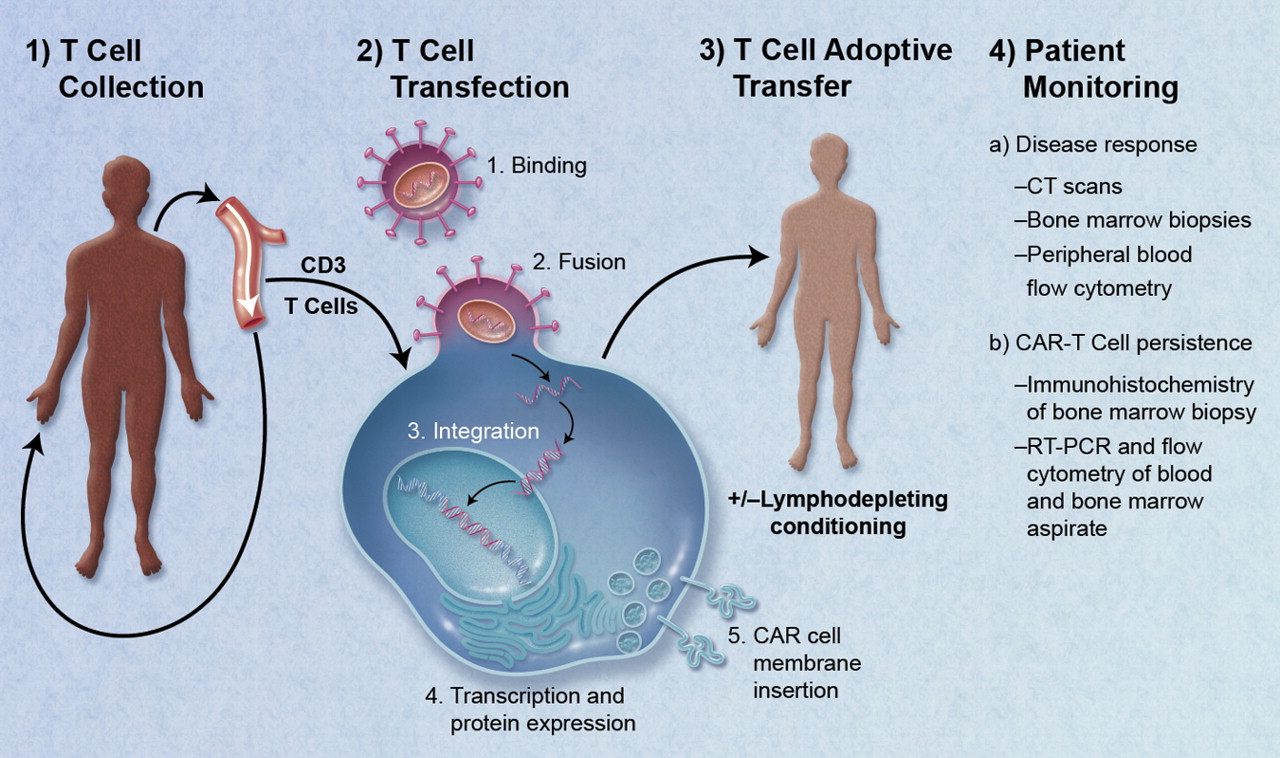
Photo: Caron A. Jacobson and Jerome Ritz / Public domain · via Wikimedia Commons
Bristol Myers Discloses Death in Autoimmune CAR-T Study as MS Data Show Early Promise
One relapsing-MS patient died 44 days after infusion
Bristol Myers Squibb said on October 23 that one participant had died in Breakfree-2, its Phase 1 trial of the investigational CAR-T therapy zolacabtagene autoleucel (zola-cel; BMS-986353) for multiple sclerosis. The patient had highly active relapsing MS, and the death occurred after the study's data cutoff, the company said while presenting interim results at MSToronto 2026. STAT reported that the death came 44 days after the cell infusion.
Late motor symptoms resisted treatment before fatal pneumonia
According to BioSpace, citing the company press release, the patient developed late-onset motor symptoms unrelated to immune effector cell-associated neurotoxicity syndrome (ICANS). Intermittent corticosteroids and intravenous immunoglobulin failed to resolve them, physicians administered high-dose cyclophosphamide, and the patient then developed septic pneumonia, dying the day after the pneumonia diagnosis. The company said the root cause could not be determined with certainty, noting extensive prior treatment and other complications.
The 66-person study mixed relapsing and progressive disease
Breakfree-2 (NCT06220201) is a multicenter, single-arm, dose-escalation Phase 1 study testing autologous CD19-directed CAR-T therapy, made with a next-generation NEX-T manufacturing process, in autoimmune neurological disease. The MS cohorts enrolled 66 people: 30 with highly active relapsing MS and 36 with progressive forms, all with ongoing disease activity or worsening disability despite treatment. Participants had received a median of two prior disease-modifying therapies, ranging from one to eight in the relapsing group and one to six in the progressive group.
Cytokine release hit four in ten but cleared in days
Safety was the primary endpoint. Cytokine release syndrome occurred in 42.4 percent of the 66 participants (28 people): 36.4 percent Grade 1 and 6.1 percent Grade 2, all resolving in a median of two days. ICANS affected 7.6 percent of participants, mostly brief and reversible, though one progressive-MS patient suffered a life-threatening ICANS event that resolved within four days. No additional deaths were reported across all zola-cel Phase 1 programs, which together treated 190 patients.
The company had already paused enrollment in September
Bristol Myers stressed that most adverse events were short-lived and consistent with previously reported zola-cel data. Notably, the company had already voluntarily paused new enrollment in its zola-cel autoimmune studies in September "out of an abundance of caution" while reviewing safety data, Reuters reported, following Novartis's halt of a rival program.
Novartis's three deaths put the whole field under scrutiny
Bristol Myers is not alone. BioSpace reported that Novartis paused eight trials of its own autoimmune CAR-T candidate, rap-cel, after three patient deaths. A mid-October Nature commentary argued that pharma and academia must pin down toxicity mechanisms and rescue strategies before these therapies move beyond oncology, while a Medscape review earlier in October examined the string of fatalities across autoimmune CAR-T trials.
All sixty patients at the selected dose stayed off standard drugs
Against the safety shadow came an early efficacy signal: all 60 participants treated at dose level 2 remained off disease-modifying therapies at last follow-up. NeurologyLive reported no new gadolinium-enhancing or enlarging T2 lesions after day 29, with efficacy analyses limited to participants with at least six months of follow-up. Efficacy was only a secondary endpoint, and the company described the signal as early and promising rather than conclusive.
Shares slipped as safety fears outweighed efficacy hopes
The shares traded about 2.5 percent lower in early trading on the disclosure day, suggesting investors weighed the fatality more heavily than the efficacy readout. For a company counting on zola-cel as a significant autoimmune pipeline asset, a death in Phase 1 could mean tighter enrollment criteria, reworked conditioning chemotherapy, and stricter infection controls imposed by regulators, raising both cost and timelines.
Safety review verdict will decide if trial restarts
The pivotal near-term event is the outcome of the safety review begun in September: whether the late motor symptoms represent a new face of therapy-related neurotoxicity or an unlucky convergence of aggressive MS and intense preconditioning will determine if, and on what terms, the paused trials restart. The answer will also set the regulatory tolerance boundary for rivals such as Novartis and Kyverna pursuing the same "reset the immune system" ambition.
Sources
- STAT: Patient dies in Bristol Myers Squibb autoimmune CAR-T trial
- Reuters: Bristol Myers discloses patient death in early-stage cell therapy study
- BioSpace: BMS reveals death from septic pneumonia of multiple sclerosis patient in CAR T trial
- talk.bio: Bristol Myers faces renewed CAR-T safety questions after trial death
- NeurologyLive: CAR-T Agent Zola-cel Shows No New Multiple Sclerosis Disease Activity in Phase 1 Study