At China's Fifth Plenum, Discipline Takes Centre Stage as Xi Bets on Control
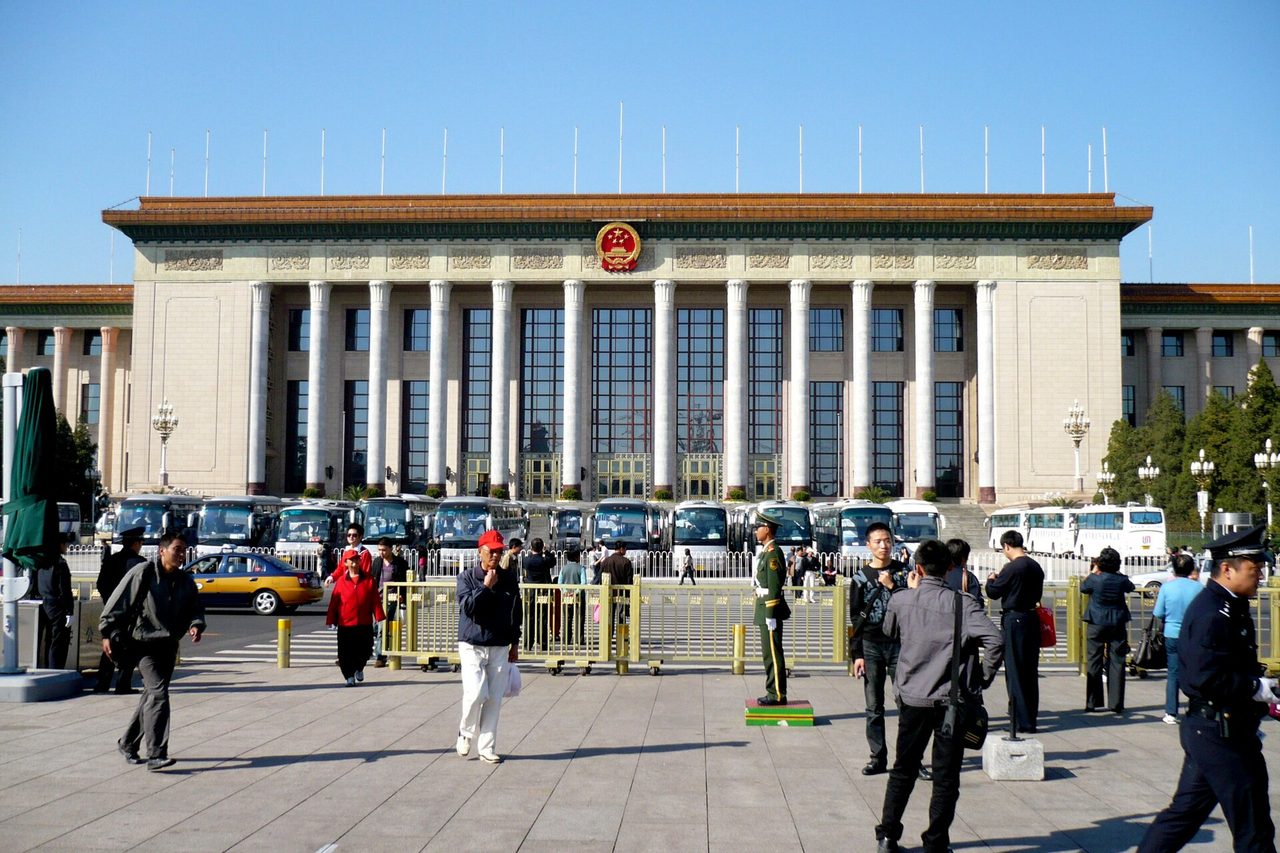
Photo: Gisling / CC BY-SA 3.0 · via Wikimedia Commons
At China's Fifth Plenum, Discipline Takes Centre Stage as Xi Bets on Control
A Four-Day Conclave With One Theme: Party Discipline
China's ruling Communist Party will gather some 300 of its highest-ranking members in Beijing from October 26 to 29 for the fifth plenum of the 20th Central Committee, a closed-door conclave that analysts say could be the last major party gathering before the 2027 leadership reshuffle. On the table is a draft decision on "persistently advancing comprehensive and strict Party governance," reviewed by the Politburo at a September 21 meeting. The agenda confirms what Beijing has been signalling for months: discipline, not the economy, is the headline act.
The Official Line: High Pressure Without Let-Up
The official language leaves no room for ambiguity. On October 23, Xi Jinping chaired a Politburo meeting to review a comprehensive report on the seventh round of inspections of central state organs, demanding a "sustained high-pressure posture" against corruption and strict fulfilment of political responsibility for governing the Party. State media quoted the meeting as calling for the stern rectification of problems uncovered in central ministries. Earlier, the Party journal Qiushi published a January speech by Xi declaring that the anti-corruption fight is "a battle that cannot be lost, one that cannot pause for a moment or retreat half a step."
Why Tighten Discipline Now
The tightening is not simply a response to worsening behaviour. "The growing focus on discipline is not because behaviour is getting worse, but because the stakes are getting higher," said Ruby Osman, a senior policy adviser on China at London's Tony Blair Institute. Daria Impiombato of the Mercator Institute for China Studies argues that Xi sees graft-busting as the key to the ruling party's legitimacy, a drive to keep purifying its ranks so that Communist rule endures where other regimes failed. A Party-wide education campaign this year on a "correct outlook on performance" targets vanity projects, abrupt policy reversals and officials who duck decisions — evidence that Beijing worries as much about bureaucratic effectiveness as about bribery.
Expulsions to Be Ratified, Empty Seats to Be Watched
The plenum is expected to ratify the expulsions of senior figures including Zhang Youxia, decided at the September 21 Politburo meeting on grounds of serious disciplinary violations, disloyalty and faction-building, with political and economic problems intertwined. The purges have hollowed out the leadership body. Jean Christopher Mittelstaedt of the University of Zurich said turnout "will most likely be the lowest at any post-Mao plenum," below last October's 168 full and 147 alternate members. An Asia Society Policy Institute estimate put the number of full and alternate members able to attend at about 291, an attendance rate of just 77.4 percent, a record low.
The Scale of the Drive Keeps Growing
The numbers show a campaign still expanding. Disciplinary authorities opened 1.01 million cases in 2025, compared with about 155,000 in 2012 — roughly 6.5 times the earlier total — according to figures assembled in an Asia Society analysis by Neil Thomas, Lobsang Tsering and Shengyu Wang. Millions of people across China's vast bureaucracy have been investigated to varying degrees since Xi took power in late 2012, with hundreds of senior officials and top generals purged, even one-time allies of the president. The military has borne the brunt of the latest wave: last year's fourth plenum confirmed the expulsion of nine top officers including He Weidong and Miao Hua, and this year's cases have further depleted the Central Military Commission.
What Comes Next: Reading the Tea Leaves Toward 2027
Attention now turns to personnel. Observers will watch which vacancies on the Central Committee are filled — and which eligible alternate members are skipped over for promotion, a signal in itself about their political standing, as Neil Thomas notes. The deeper question is whether ever-stricter supervision can change the conditions that breed graft. One scholar cited by the BBC argued that Xi's campaign has amassed a striking record yet never won the war: many of today's fallen "tigers" were already corrupt a decade or more ago as mid-level cadres, rising all the way despite it. The fifth plenum will entrench the machinery of strict governance; whether it delivers cleaner and more capable rule will only become clear on the road to the 21st Party Congress in 2027.
Sources
- The Straits Times: Tougher discipline, and Xi's authority, key at China's Communist Party's fifth plenum
- CNA: CNA Explains: China’s fifth plenum puts party discipline centre stage. Why does it matter?
- South China Morning Post: Xi Jinping leads early Politburo meeting to signal anti-corruption drive ahead of plenum
- AsiaDaily: China's Fifth Plenum Puts Xi's Discipline Drive and Depleted Leadership in Focus
- 五中全会前瞻:会前为何密集“打虎”?未来怎样“从严治党”?