A Sore Knee, a Hospice Warning, and a Last-Slot Trial That Cured His Leukemia
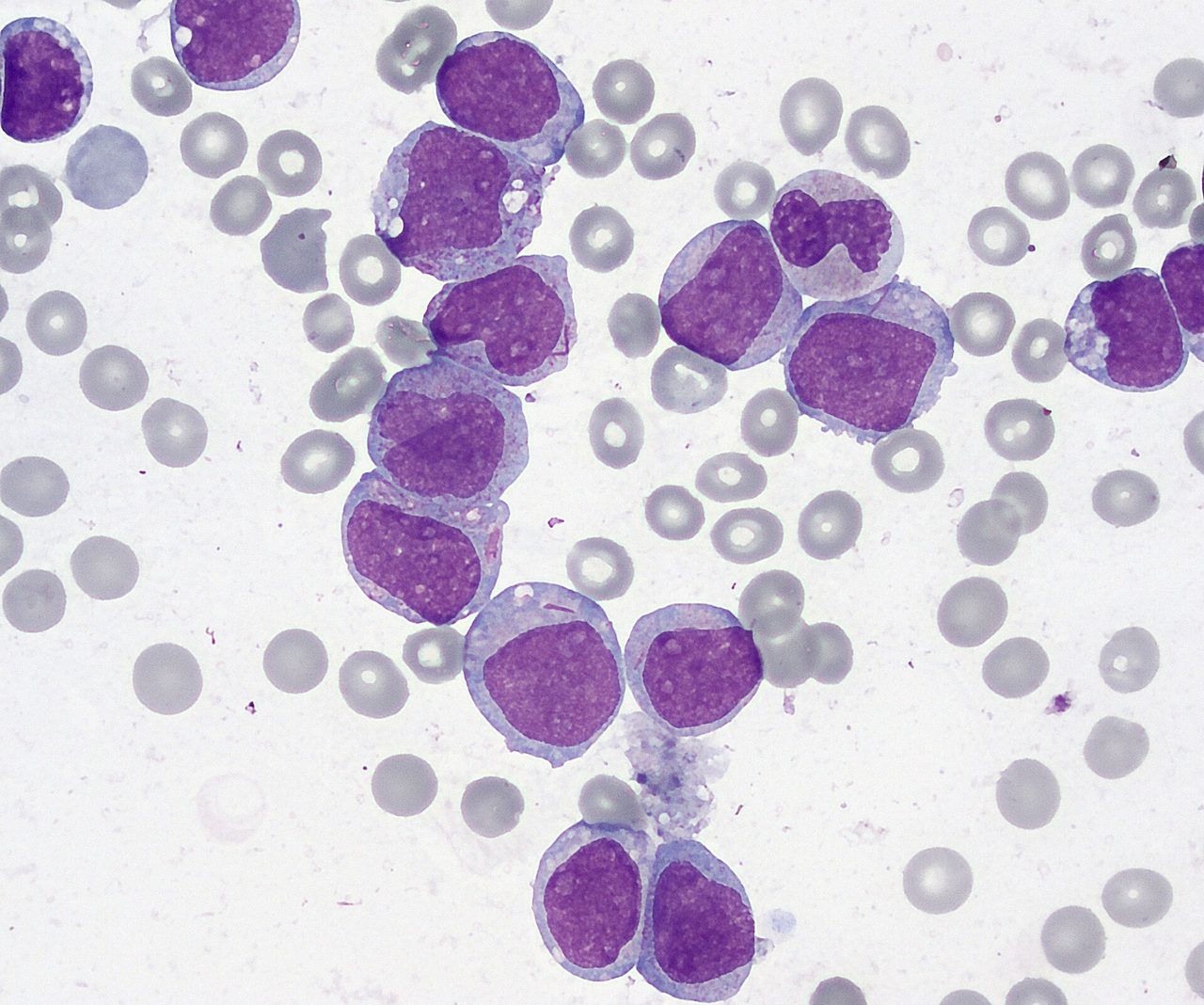
Photo: Animalculist / CC BY-SA 4.0 · via Wikimedia Commons
A Sore Knee, a Hospice Warning, and a Last-Slot Trial That Cured His Leukemia
A Florida dad blames his knee pain on gout
In September 2024, Ryan Goepel, a Florida father of three, felt his knee aching during a trip. He had gout, so he assumed it was another flare. When the pain lingered, he saw his doctor, who prescribed medication and ordered blood work. Two days later came the alarming call, as reported by CBS News: stop whatever you are doing and go straight to the hospital. His immune system had effectively collapsed, and nobody yet knew why.
An oncologist walks in, and the diagnosis is leukemia
At the hospital, Goepel grew uneasy when an oncologist arrived to discuss repeat blood tests. "I'm like, 'Why are you here? I have a sore knee,'" he recalled. The answer was leukemia. A biopsy later confirmed acute myeloid leukemia, or AML, an aggressive blood cancer with a five-year survival rate of about 30%, according to the Cleveland Clinic. By admission, his organs were on the verge of shutting down.
Told to plan hospice, his girlfriend says no
The doctors did not deliver the worst news to the patient but to his family: they told his girlfriend to consider hospice care and to make arrangements, saying the then-49-year-old was not leaving the hospital. She refused to accept it. Goepel and his girlfriend sought a second opinion instead, a decision that redirected everything that followed.
A Miami referral reveals adverse-risk disease
The second opinion came from Sylvester Comprehensive Cancer Center in Miami, where hematologist-oncologist Dr. Justin Watts confirmed AML with an adverse-risk genetic profile. That label mattered: standard chemotherapy was unlikely to control this form of the disease and could leave Goepel weaker while the cancer advanced. The conventional path was effectively closed.
One trial slot left, testing older patients' drugs on the young
The bright spot was a Phase 2 clinical trial overseen by Watts, with a single opening remaining. It tested whether two medications normally given to older AML patients could work in younger ones, and Goepel's cancer carried the genetic features of disease seen in people in their 70s or 80s, making him a fit. The regimen paired a daily pill for 28 days with a daily infusion during the first week. On day one, Goepel wrote "I'm not done yet" in a journal his girlfriend had given him.
Trial data show 25 of 36 responding within 28 days
The outcome went beyond one patient. According to data published in the journal Haematologica in September, 25 of 36 participants saw their cancer shrink or disappear over the 28-day course, with 19 reaching complete remission. Goepel was among them. Watts noted that the trial regimen was a bridge rather than the finish line: patients still needed bone marrow transplants, which can rebuild the immune system and prove curative.
Two sisters match, and the transplant lands on Nov. 26
Both of Goepel's sisters proved perfect donor matches. On Nov. 26, 2024, under transplant physician Dr. Lazaros Lekakis, Goepel received his bone marrow transplant. "My sister saved my life," he said. More than half of the trial's patients went on to transplant, according to the data. Recovery meant three weeks in the hospital followed by 100 days in isolation at home.
Two years cancer-free, pointing to a wider shift
Goepel has now been cancer-free for two years, a result Watts called improbable at diagnosis. The broader signal is a treatment shift: a two-drug combination reserved for elderly AML patients may extend to younger people whose disease shares the same genetics. For a man once steered toward hospice, the trial did not just buy time; it redrew what his doctors believed was possible.
Sources
- CBS News: He thought it was gout. Doctors said he needed hospice. A clinical trial saved his life.
- Yahoo: Clinical trial saves man initially given weeks to live: "Not done yet"
- AOL: Clinical trial saves man initially given weeks to live: "Not done yet"
- WGHN: Clinical trial saves man initially given weeks to live: “Not done yet”
- Total News: He believed it was gout. Doctors told him he required hospice care. A clinical trial changed everything for him.