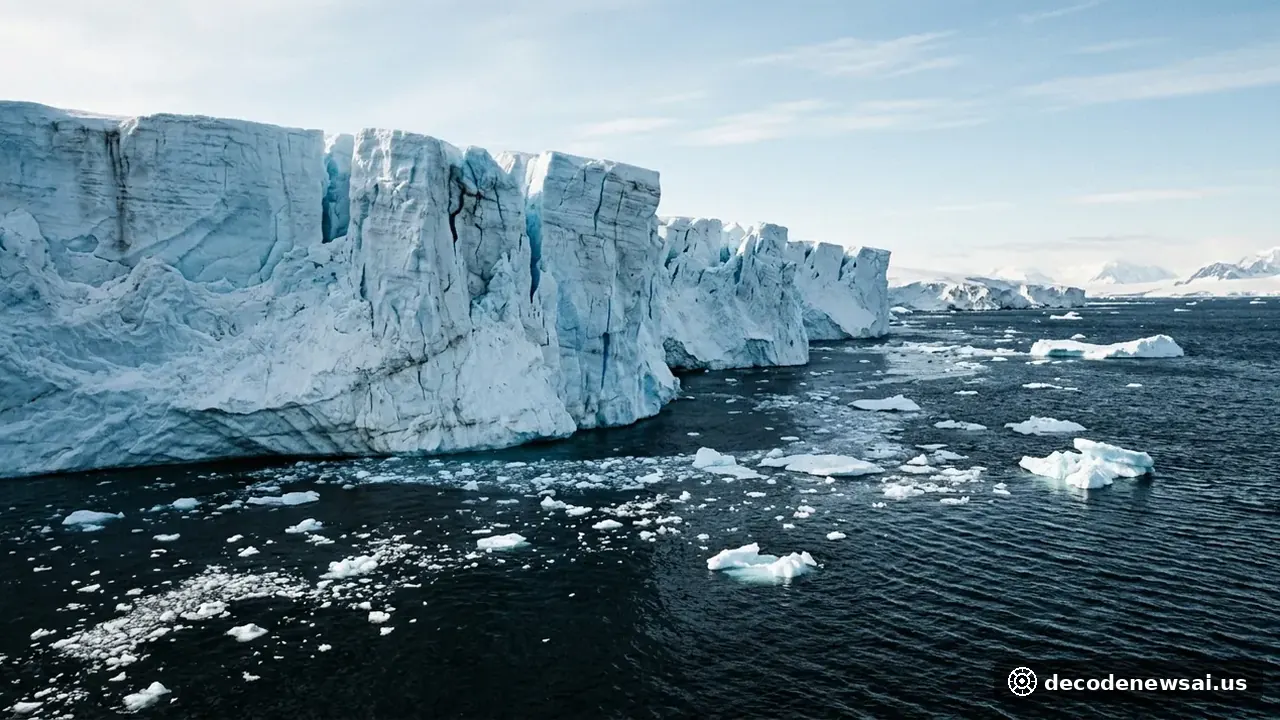
CAMBRIDGE, Mass. — Towering Antarctic ice cliffs can collapse faster than climate models predict. The retreat often halts. Underwater terrain and floating ice debris often halt the retreat before a runaway chain reaction unfolds. A satellite study published in Science reports this.
Testing Runaway Collapse Theory
For years, glaciologists debated marine ice-cliff instability. The theory warned of sheer ice walls exceeding 100 meters. Such walls would crumble under their own weight. They would expose ever-taller cliffs inland.
Researchers analyzed 15,330 observations collected between 2019 and 2023 by NASA's ICESat-2 laser altimeter. They came from MIT, the Woods Hole Oceanographic Institution, and the University of Michigan. They found the average Antarctic ice cliff stands around 30 meters tall. Only rare sites reached 100 to 127 meters.
Fast Retreat Followed by Stability
The team tracked four of the tallest roughly 100-meter cliffs every three months. It observed rapid initial retreats. Those retreats outpaced standard models. Stabilization and seaward readvance followed.
The quote came from lead author Caroline Needell. "We found that when the cliffs were retreating, they were doing so faster than what has been modeled, which would mean more ice loss and higher contributions of sea level rise,"
The glaciers stabilized. "But because we found that the retreat was short-lived, and all the glaciers eventually stabilized, that would suggest that things won't be so bad. We don't see this runaway effect."
Natural Brakes Beneath the Ice
Researchers found the brakes were natural. Thicker floating ice mélange, deeper supporting seawater, and rising subglacial bedrock ridges act as natural speed bumps. They thin and stabilize retreating cliffs.
Co-author Jeremy Bassis cautioned. It remains unknown whether glaciers will keep restabilizing as warming intensifies.