CAMBRIDGE, Mass. — Researchers at MIT, the Whitehead Institute, and Charité–Universitätsmedizin Berlin announced on Nov. 19 the first whole-body single-cell gene activity atlas of an adult vertebrate, mapping more than 600,000 cells.
Mapping 600,000 Cells in a Transparent Fish
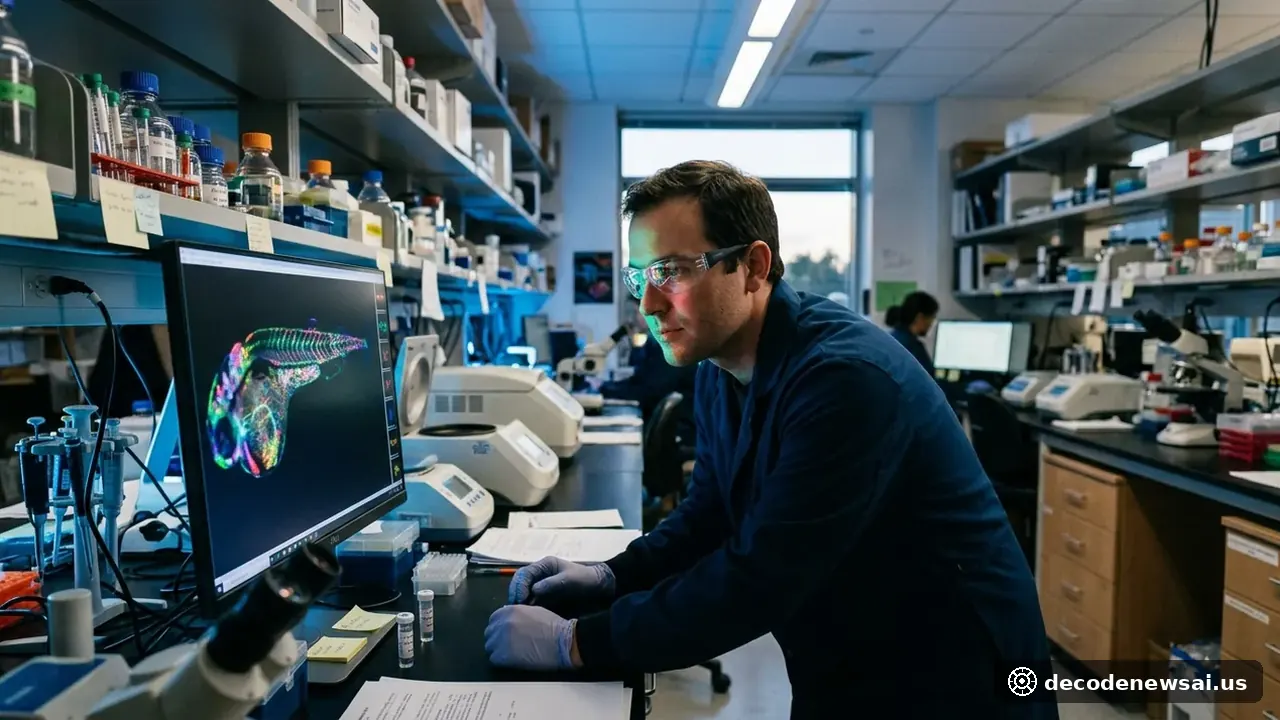
Published in Science on Oct. 29, the team profiled Danionella cerebrum, a nearly transparent fish barely 1 centimeter long whose brain is visible from above. Formally described in 2021 and closely related to zebrafish, the miniature fish allowed researchers to apply single-cell RNA sequencing and spatial mapping across the brain, spinal cord, eyes, internal organs, and fins.
Regional Brain Identity and Cellular Memory
Scanning the entire organism uncovered patterns invisible in single-organ studies. Neurons located in the same brain region shared closer gene activity profiles than neurons using the same neurotransmitter in different regions. Adult connective-tissue cells, known as fibroblasts, also retained developmental gene programs tied to forelimb and hindlimb positioning, suggesting a molecular memory that may guide tissue repair.
Tracking Brain Regeneration on DigiFish
Using the atlas, scientists traced how injured forebrain tissue progresses from early immune responses to neural stem-cell activation and new neuron maturation, and made the dataset public via the DigiFish platform. "The transcriptomes of cells tell you how that genome is being utilized in the different cell types. To have the transcriptome of every cell type seems like a big turning point in how one would investigate the biology of an organism," said Whitehead Institute member Peter Reddien.