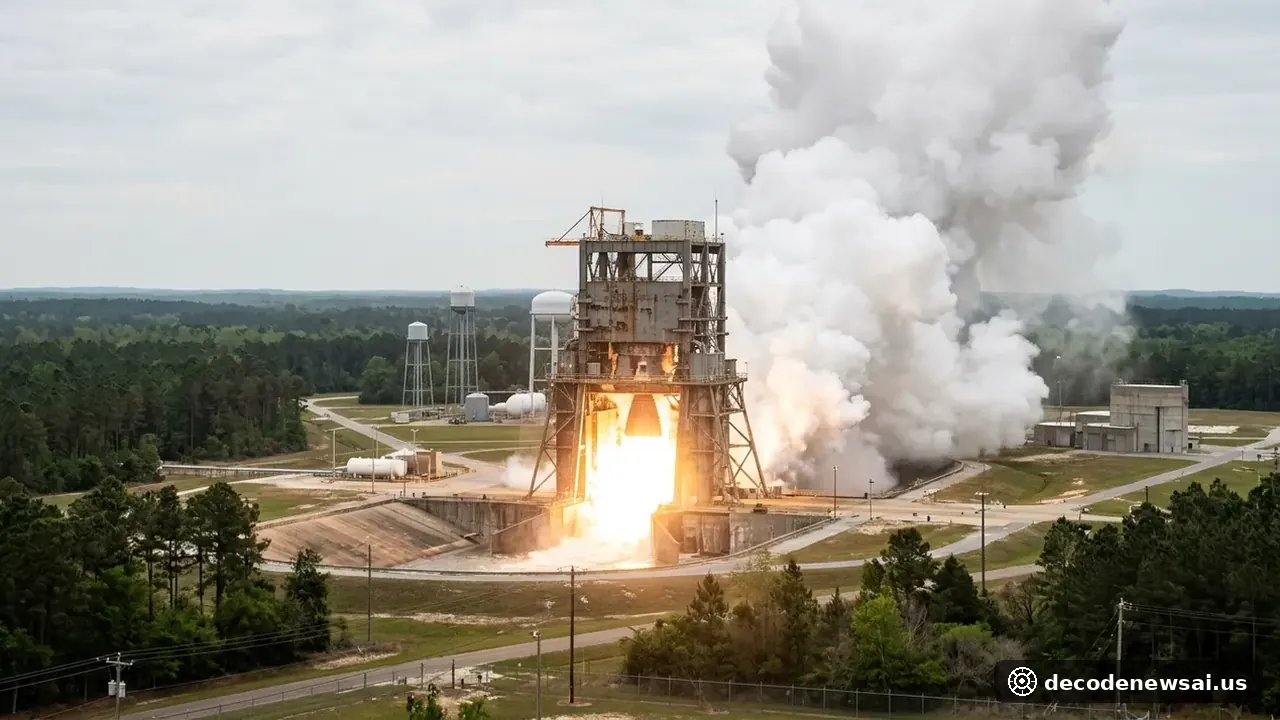
BAY ST. LOUIS, Miss. - NASA and prime contractor L3Harris Technologies hot-fired developmental RS-25 engine No. 10001 for 200 seconds on Nov. 18 at Stennis Space Center in Mississippi. The full-duration ground test gathers performance data for the 2028 Artemis IV Moon landing mission.
Engine No. 10001 Completes Three-Minute, 20-Second Burn
Developmental Unit Completes Three-Minute, 20-Second Burn
Engineers fired engine No. 10001 on the Fred Haise Test Stand for its planned duration of three minutes and 20 seconds, NASA said in a Nov. 19 report. Although this developmental engine will not fly on a mission, the test captures heat, vibration, and reliability data for future flight engines.
"While this developmental engine will not be used in flight, the hot fire test provides NASA and NASA's prime contractor L3 Harris Technologies with the capability to capture critical data to improve engine performance and reliability for future NASA Artemis missions," NASA stated.
Four RS-25 Engines Power SLS Toward 2028 Lunar Landing
Four Engines Power SLS Toward 2028 Lunar Landing
Each Space Launch System rocket uses four upgraded RS-25 engines, evolved from space shuttle main engines, generating up to 2 million pounds of thrust together—and more than 8.8 million pounds of total liftoff thrust alongside two solid rocket boosters.
Operators from NASA, L3Harris, and Syncom Space Services conducted the firing. Artemis IV is scheduled to launch from Kennedy Space Center in Florida in 2028 to carry astronauts aboard Orion to explore the Moon's south polar region and prepare for Mars missions.