Vanderbilt and German Researchers Uncover How Friendly Gut Bacteria Adapt to Intestinal Niches
NASHVILLE, Tenn. — An international team from Vanderbilt Health and Germany's Julius-Maximilians-Universität Würzburg has uncovered how a common beneficial gut microbe adapts to shifting nutrient and iron conditions across the digestive tract, Vanderbilt Health reported Nov. 27.
Co-Culture Model Tracks Bacteria Near Gut Mucus
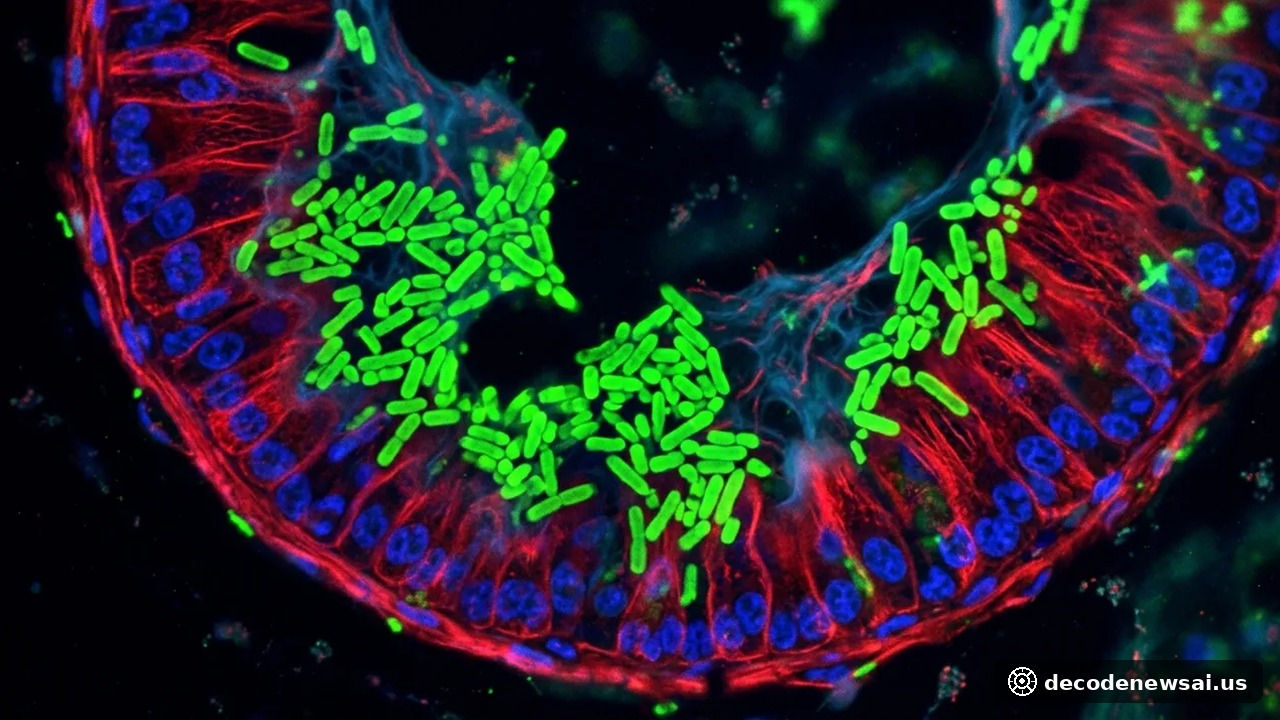
Published Nov. 25 in Nature Communications, the study paired mucus-producing human gut epithelial cells with Bacteroides thetaiotaomicron in a novel laboratory co-culture system alongside dual RNA sequencing. Researchers confirmed that bacteria living directly on the protective mucus layer face pronounced iron scarcity and activate distinct pathways to digest host-derived carbohydrates compared with microbes floating farther out in the gut lumen.
Newly Identified IroR RNA Coordinates Iron Response
To survive iron shortages near the intestinal lining, the bacteria rely on a previously uncharacterized small regulatory RNA that the scientists named IroR. While IroR improved bacterial fitness during iron-limited laboratory tests, mice colonization experiments revealed a surprising twist: bacteria engineered without IroR actually outcompeted strains carrying it.
Findings Guide Future Microbiome Therapies
Co-corresponding author Wenhan Zhu said the results show microbial genetic programs balance competing survival trade-offs rather than optimizing a single trait. Understanding both where microbes sit and how they adapt could help scientists eventually engineer probiotics to treat inflammatory gut diseases.