Three earnings-call lines from Tesla, Meta and IBM that stayed with us
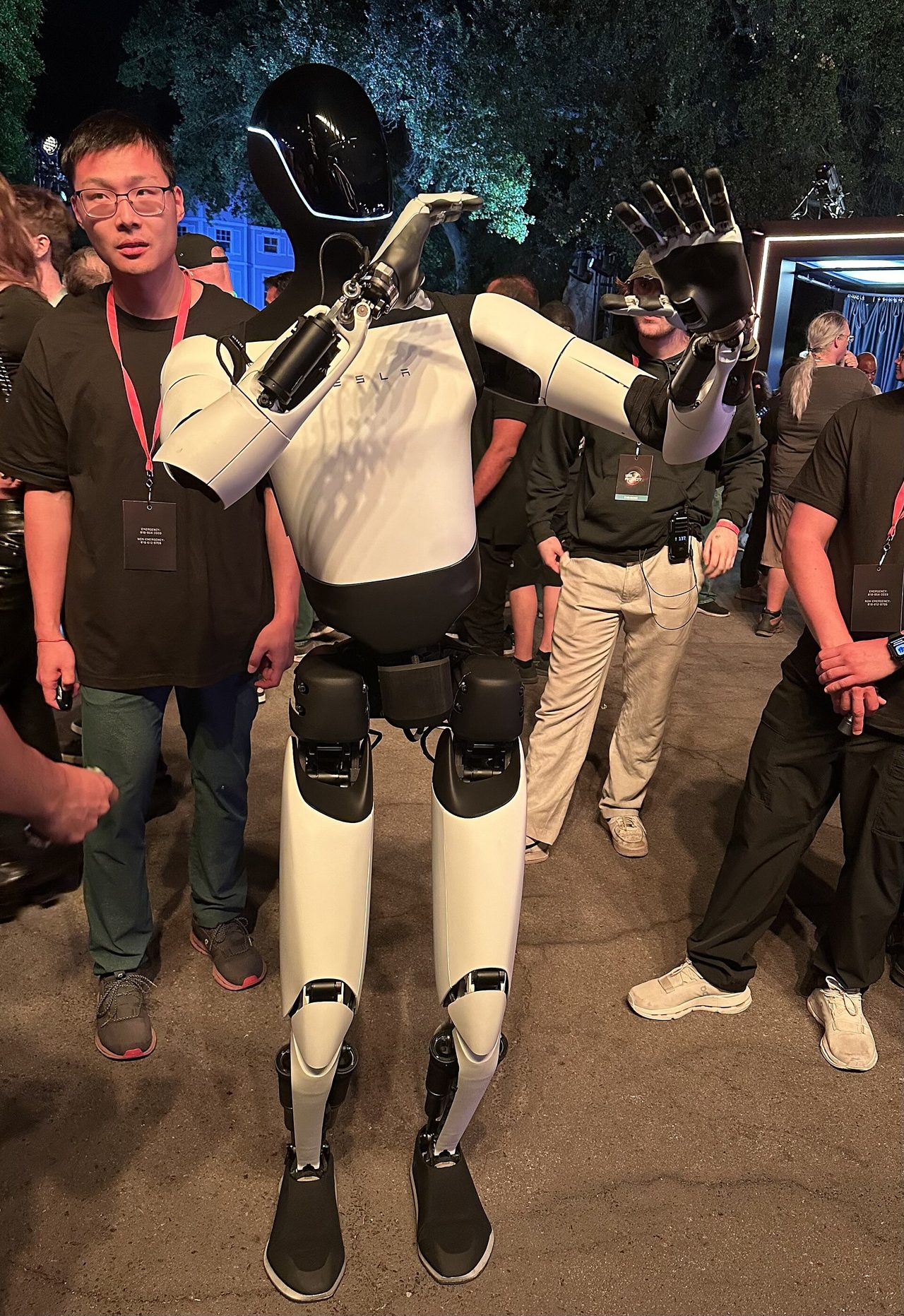
Photo: Steve Jurvetson / CC BY 2.0 · via Wikimedia Commons
Three earnings-call lines that stayed with us
On Wednesday evening, October 21, three of the most-watched companies on the market — Tesla, Meta and IBM — reported third-quarter results and took questions. All three spent their airtime on "superintelligence." But the lines people kept repeating were three more revealing statements about where the money, the machines and the legal bills are actually going.
Tesla cuts its capex call to $20 billion
Tesla CFO Vaibhav Taneja told the call that the company is revising full-year 2026 capital expenditure guidance to approximately $20 billion, down from more than $25 billion, "as a result of managing our capital deployment efficiently and plan to fund it primarily from our cash flows from operations." CNBC and Yahoo Finance both put that sentence near the top of their coverage.
Spending slips, but the bill moves to 2028
Tesla spent $4.73 billion on capex in the quarter, against roughly $7.5 billion expected by analysts on LSEG data cited by tikr, and posted positive free cash flow of $1.53 billion. Musk said the ramp "will start to become more meaningful next year" and becomes "noticeable in the tens of billions in '28." The company also secured capacity to borrow up to $30 billion to support future capex.
Optimus is on the line, but 20,000 a week is a year away
Tesla has started "early production" of Optimus on a high-volume line in Fremont, California, the first units built to a production-quality standard. Musk said reaching an annualized rate of 20,000 units a week will take "probably at least a year, maybe a little longer," because the ramp will be "somewhat bumpy." Deliveries to customers outside Tesla are expected around the end of 2027.
Terafab's bill does not come due yet
As reported by Yahoo Finance, the Terafab chip plant Tesla is building with SpaceX will need tens of billions of dollars in equipment through early 2028 and likely more than $100 billion over the long term, with real production not expected until late 2028.
Meta posts a record $64.6 billion
Meta's revenue rose 26% year over year to $64.60 billion, above the $63.37 billion LSEG consensus, and net income reached $9.86 billion against $2.71 billion a year earlier. Ad impressions rose 10% and average ad prices 14%.
A $9.89 billion legal charge halves the EPS
Meta recorded a $9.89 billion charge tied to its August 2026 multistate attorneys general agreement on teen mental health, part of a settlement providing payments of up to about $18.59 billion. GAAP earnings per share came in at $3.83; without the charge it would have been $7.40. Total expenses rose 68% year over year to $51.6 billion, which CFO Susan Li attributed primarily to legal costs, infrastructure and third-party AI token costs.
Class C shares fund the AI build
Meta is creating a new non-voting Class C share class, distributed one-for-one to existing holders in January 2027 in an arrangement the company says will make the Class A price reflect "the effect of a two-for-one stock split." Full-year capex guidance was narrowed to $135 billion–$145 billion from $130 billion–$145 billion. Quarterly capex hit $34.9 billion while operating cash flow was $32.79 billion, pushing free cash flow to negative $2.1 billion.
Muse reaches 10 million users in six weeks
Zuckerberg said more than 10 million people in the U.S. and Canada have set up Muse agents in roughly six weeks, and about 25% of people who set it up use it on a given day. On Instagram, global time spent per user hit an all-time high and rose by double digits year over year. Li said the AI businesses will begin contributing incremental revenue in 2027.
IBM's mainframe cycle fights back
IBM generated $17.1 billion in revenue, up 6% at constant currency, and non-GAAP profit of $2.95 per share, 2.7% above consensus. Software revenue of $7.80 billion grew 8% and beat the $7.66 billion StreetAccount consensus; consulting revenue of $5.34 billion was flat and just under the $5.37 billion consensus. IBM Z revenue fell 19% year over year, but the z17 platform has produced more than $1 billion in incremental revenue over six quarters versus earlier programs, delivered the strongest mid-range IBM Z launch in nearly two decades, and shipped MIPS up more than 100% with installed MIPS up about 18%.
AI is already 30% of consulting revenue
CFO Jim Kavanaugh said AI "is increasingly embedded in broader transformations our clients are undertaking, representing about 30% of our consulting revenue in the quarter and 35% of our backlog." CEO Arvind Krishna said clients are deploying "Super Intelligence" in ways that "transform entire operating models, instead of simply addressing narrow or novel problems." Kavanaugh added: "the current street estimates for the year are about $32 billion of revenue... We feel comfortable with that $32 billion." OpenShift ARR reached $2.4 billion, growing more than 30%.
Watch the ramp, the funding, and the growth
For Tesla, the ramp toward 20,000 Optimus units a week and the shape of 2028 spending. For Meta, how fast Class C proceeds arrive in January 2027 and when Muse starts carrying revenue. For IBM, whether AI can pull consulting off flat and into growth.
Sources
- Yahoo Finance: Tesla, Meta and IBM: 3 earnings call shout outs that left us thinking
- CNBC: Tesla (TSLA) Q3 2026 earnings report
- tikr: Tesla Cuts 2026 Capex to $20 Billion, but Q4 Could Still Be Its Biggest Spending Quarter Since 2023
- CleanTechnica: Tesla Reports A Great 3rd Quarter, Robotaxi & FSD Finally Taking Off
- Interesting Engineering: Tesla Optimus production starts as Musk targets 20,000 robots weekly