Appeals Court Weighs Whether Trump Can Fire Prosecutors Picked by Judges
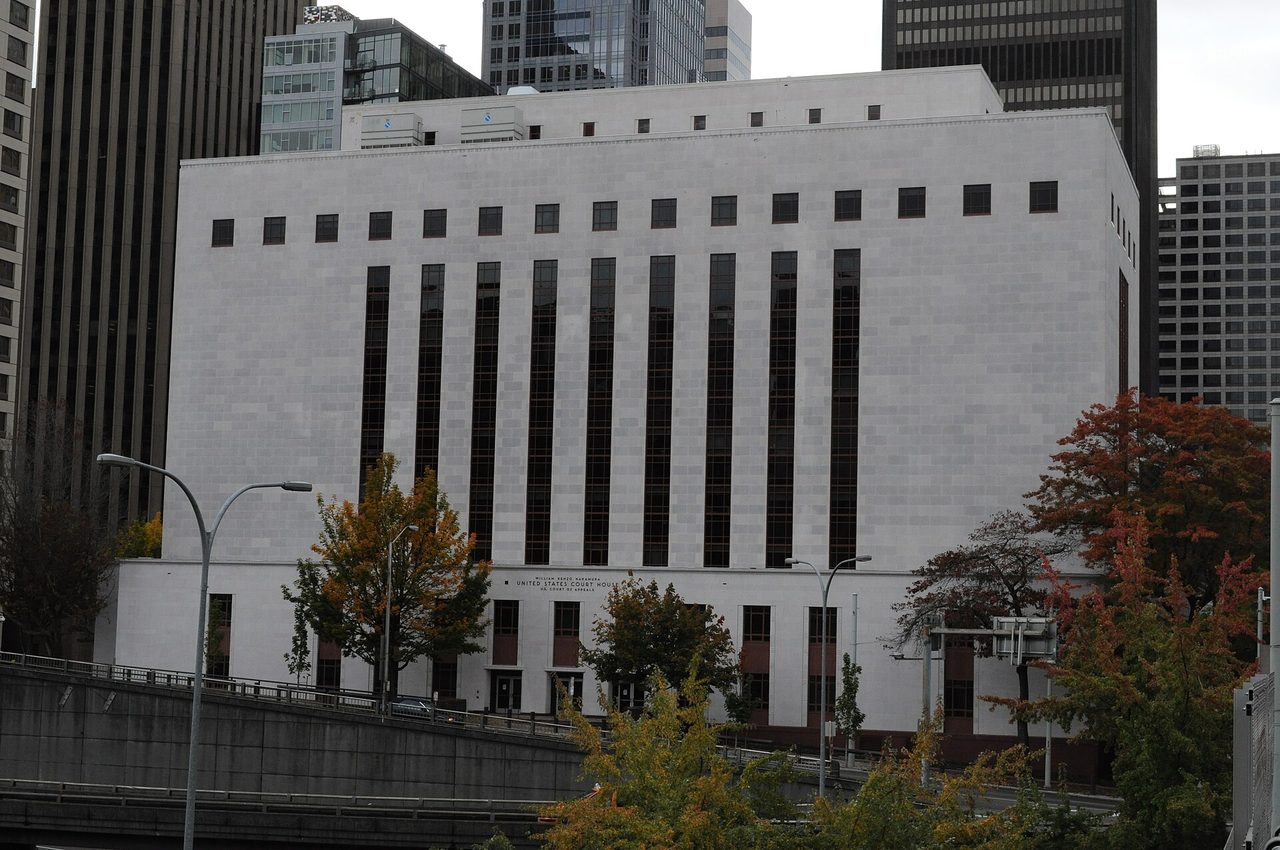
Photo: Joe Mabel / CC BY-SA 3.0 · via Wikimedia Commons
Appeals Court Weighs Whether Trump Can Fire Prosecutors Picked by Judges
A Friday Hearing on Who Controls a Prosecutor's Fate
A three-judge panel of the U.S. Court of Appeals for the Ninth Circuit heard oral arguments on October 23 in a case that could define the limits of presidential power over federal prosecutors: whether President Donald Trump can fire U.S. attorneys appointed by federal judges. According to Politico, a Justice Department lawyer urged the panel to rule that Trump holds that power. The panel — Judge Richard Paez, a Clinton appointee; Judge Jay Bybee, a George W. Bush appointee; and Judge Jennifer Sung, a Biden appointee — appeared somewhat skeptical of the government's position. The dispute centers on Roger Rogoff, the Seattle-area U.S. attorney whom district judges installed in July and whom Trump dismissed almost immediately.
Appointed and Sworn In, Then Fired Within the Hour
The standoff began on July 15. According to Courthouse News, the 17 sitting federal judges of the Western District of Washington voted to appoint Rogoff, a former state judge and federal prosecutor, as the district's U.S. attorney and swore him in the same day. Less than an hour later, an email from a personnel official informed Rogoff that Trump had ordered his removal. Rogoff sued, and within hours the Justice Department filed a notice of appeal, sending the fight to the Ninth Circuit. The case turns on 28 U.S.C. Section 546, the statute that lets district courts fill a vacant U.S. attorney post until the Senate confirms a permanent replacement.
A District Judge Says No, Reinstates Rogoff
On October 1, Chief U.S. District Judge Stanley Bastian of the Eastern District of Washington — hearing the case because the Western District judges were recused — granted a preliminary injunction restoring Rogoff. According to CBS News, Bastian ruled from the bench after an hourlong hearing, calling the issue one of first impression: "can the president fire a U.S. attorney appointed by the district court?" His answer: "no. The president cannot unilaterally fire a United States attorney appointed by the district court." Bastian held that Rogoff has been the rightful officeholder since July 15, and that neither acting U.S. attorney Charles Neil Floyd nor Trump nominee Pete Serrano — who lacks Senate confirmation — holds the office.
The Justice Department Invokes Article II
The administration's argument is blunt. As reported by Law & Crime, the government lawyer told the panel: "each U.S. attorney is removable by the president means each U.S. attorney is removable by the president." The department contends that U.S. attorneys exercise the president's core executive power to investigate and prosecute crime, so shielding a court-appointed prosecutor from removal would create an unaccountable prosecutor and hand the judiciary an effective veto over executive authority. Days after Bastian's order, the Ninth Circuit granted an administrative stay, keeping Rogoff out of office while the appeal proceeds. Bloomberg Law noted the panel showed no clear leaning at Friday's argument.
A Ruling That Could Reach Beyond Seattle
The outcome will ripple past Washington state. According to NBC News, the administration also ousted a court-appointed U.S. attorney in northern New York and James Hundley, a judges' pick in Virginia with more than 30 years of criminal and civil experience. Trump last month nominated Pete Serrano, the first assistant U.S. attorney in eastern Washington, for the Seattle post, but Serrano has not been confirmed and faces opposition from Washington's senior Democratic senator, Patty Murray, who called Bastian's ruling "an important victory for the rule of law," per HuffPost. Whatever the Ninth Circuit decides, the first appellate answer to this question could set the rules for every court-appointed prosecutor — and may yet head to the Supreme Court.
Sources
- Politico: Appeals court considers Trump’s power to fire court-appointed federal prosecutors
- Courthouse News: Feds fight to keep US attorney fired
- Law & Crime: DOJ lawyer defends Trump's removal power before 9th Circuit
- Bloomberg Law: Trump DOJ Clashes With Fired Seattle US Attorney on Appeal
- CBS News: Judge blocks Trump's firing of top federal prosecutor in Seattle and restores him as U.S. attorney