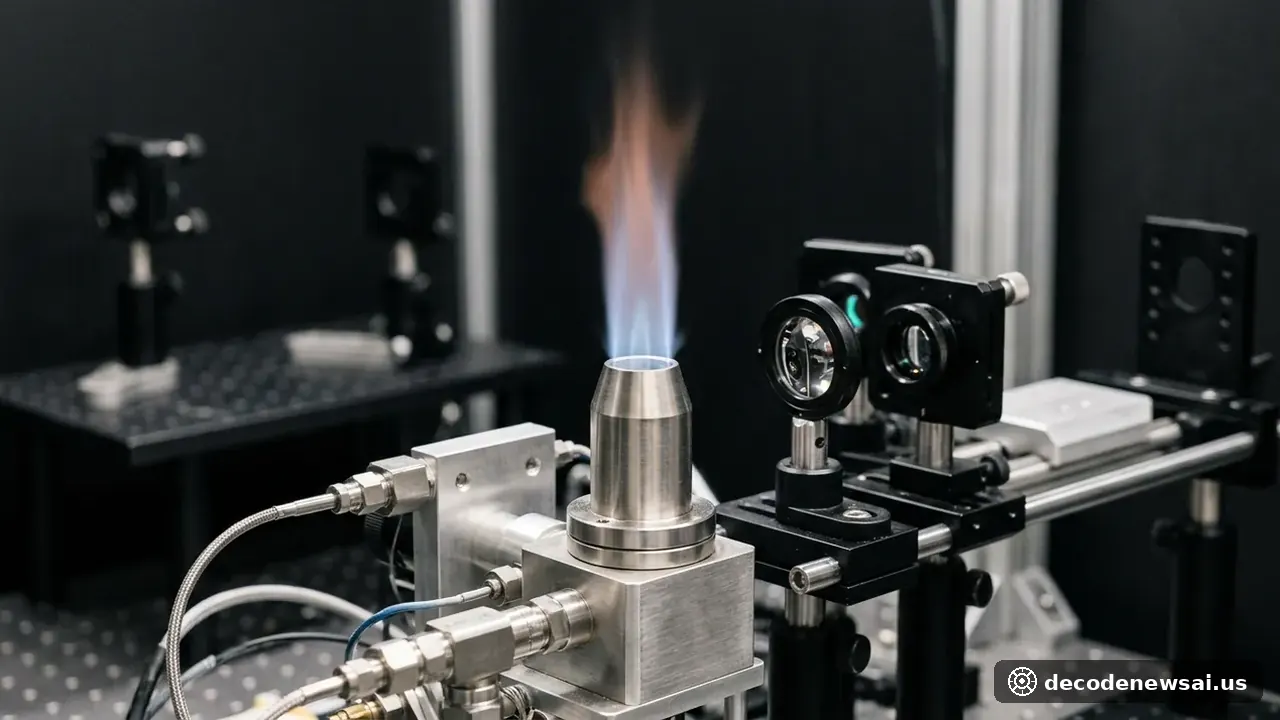
ADELAIDE, Australia — Researchers from Adelaide University, UNSW and Gas Infrastructure Research Australia reported on Nov. 19 in Next Energy. Sodium was the cause. Hydrogen flames appear orange in some settings and nearly invisible in others. The sodium was trace airborne material from sea salt.
Ocean Winds Shift Flame Visibility
Hydrogen had a 309-nanometer ultraviolet peak. The peaks differed.
The ratio between sodium and hydrogen radical signals varied more than 28-fold. It ranged from 0.4 to 11.4 depending on weather. Coastal winds carrying sea salt aerosols boosted the orange glow. Inland or indoor air left flames barely visible.
Hydrogen Glows Dimmer Than Natural Gas
Even with trace sodium present, hydrogen flames emitted far less visible light than natural gas. The glow was dim.
It summarized the Volume 13 study. The safety concern was explicit.
Industrial Safety Requires Optical Sensors
As utilities test hydrogen blending for heating and industry, the authors recommend replacing visual checks. They recommend ultraviolet, infrared and temperature sensors. Those sensors can detect colorless flames reliably across all environments. Visual checks should go.