COLLEGE STATION, Texas - Scientists at Texas A&M University reported on Nov. 22 in the Proceedings of the National Academy of Sciences that thymine—a chemical building block unique to DNA—helped early life survive intense ultraviolet radiation by steering damage into forms that are easier to repair.
Rentzepis Team Exposes Uracil and Thymine to Ultraviolet Light
Solving an Evolutionary Paradox
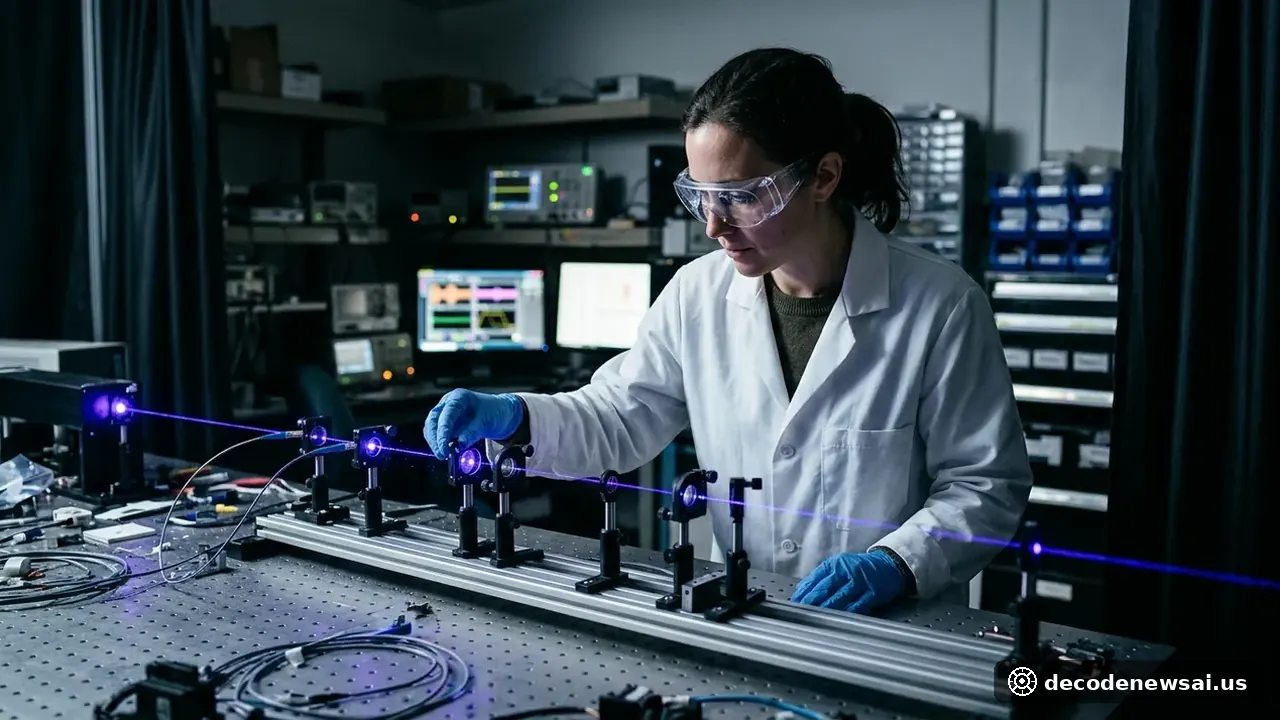
For decades, biologists wondered why life transitioned from RNA, which uses uracil, to DNA, which uses thymine, given that thymine reacts more readily to ultraviolet light. On early Earth, before an ozone layer existed to filter sunlight, that sensitivity looked like a survival handicap. Led by Professor Peter Rentzepis alongside researchers Keyvan Khosh Abady and Negar Karpourazar, the team exposed both molecules to simulated early-Earth ultraviolet light using absorption, fluorescence, and Raman spectroscopy.
Controlling Damage Rather Than Avoiding It
Thymine Directs Reversible Damage and Aids Water Disinfection Checks
Experiments showed thymine absorbs harmful solar energy and confines chemical changes to the genetic bases, sparing fragile parts of the strand. "We found that thymine tends to direct UV damage into a more reversible form, suggesting that early genetic molecules may have survived intense sunlight not by avoiding damage, but by controlling it and making it easier to self-repair," Khosh Abady said.
Modern Water Disinfection Applications
Beyond clarifying life's origins, the spectral measurements provide a new reference tool for spotting pathogens faster and verifying whether ultraviolet disinfection in water-treatment plants has effectively neutralized microbes. The team next plans to test whether these genetic building blocks formed on Earth or arrived aboard meteorites.