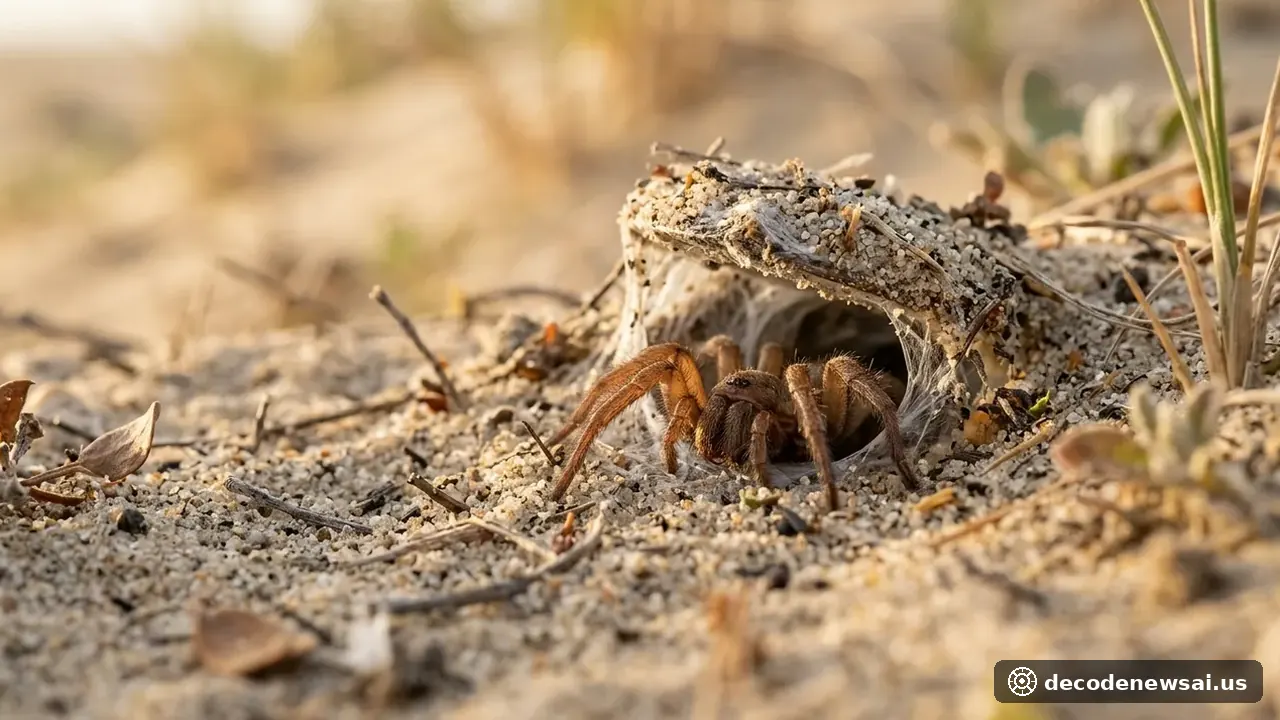
DAVIS, Calif. - Scientists at the University of California, Davis, have sequenced the genome of the quarter-sized California trapdoor spider Aptostichus stephencolberti, revealing 4.6 billion DNA base pairs—roughly 50% larger than the human genome.
Repetitive DNA Accounts for 77% of 52 Chromosomes
Published in the Journal of Heredity, the sequencing marks the first reference genome completed for a spider in this family and uncovered 52 chromosomes compared with 46 in typical human cells. "At 4.6 gigabases, or 4.6 billion DNA base pairs, it's not the largest genome among the spiders, but it's significant," said corresponding author Prof. Jason Bond, noting that about 77% consists of repetitive sequences and spiders lack conventional telomere repeats.
Coastal Dune Predator Holds Venom Research Potential
Named in 2008 after comedian Stephen Colbert requested an honor on television, the spider lives only in coastal sand dunes between the San Francisco Bay area and Monterey. According to ScienceDaily and UC Davis, only 30 to 50 of the more than 50,000 known spider species have venom toxic to people, and researchers hope genomic data will reveal venom compounds useful for painkillers and pest control.
Rising Seas Threaten Isolated Dune Habitats
Because female trapdoor spiders remain in silk-lined underground burrows and rarely travel far, fragmented coastal dunes isolate separate populations. Supported by the state-funded California Conservation Genomics Project and the National Science Foundation, SciTechDaily and Mirage News reported the work will help track how climate change, fires, urbanization, sea-level rise, and invasive species threaten genetic diversity.