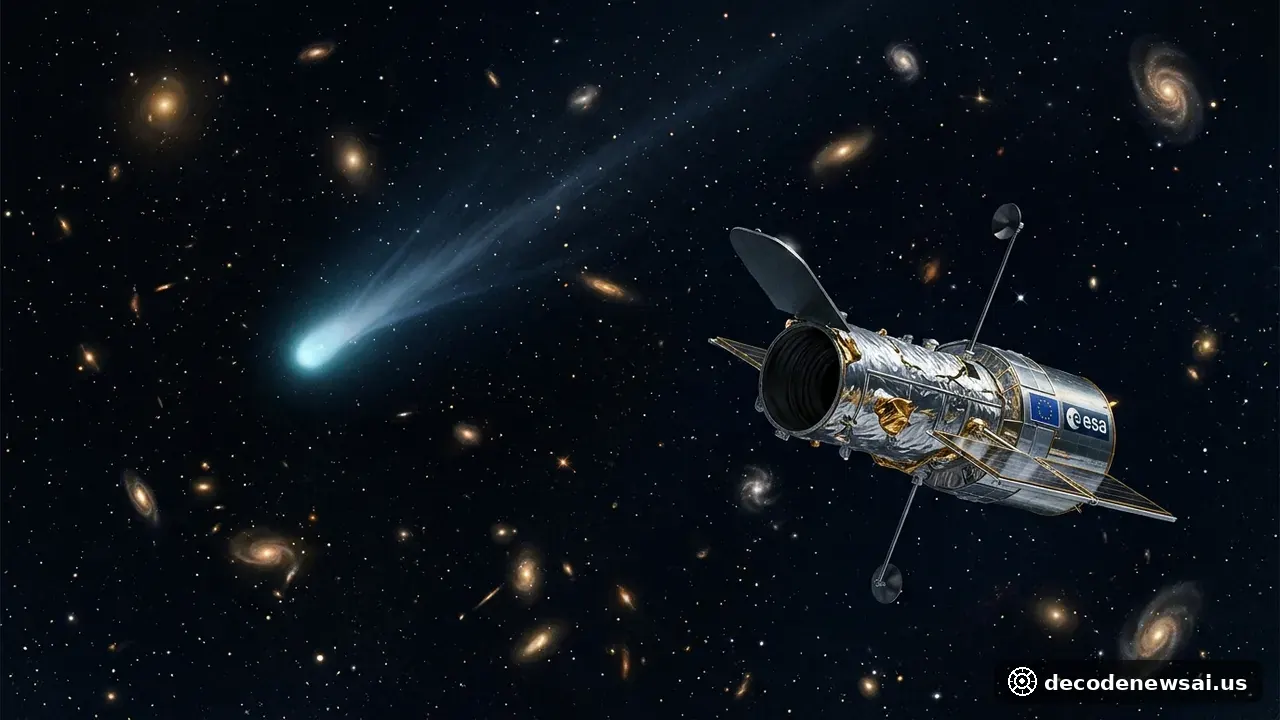
PARIS - The European Space Agency's (ESA) Euclid space telescope found a comet. It was the first previously unknown comet. It was designated C/2026 S1 (Euclid). Deep-sky images were captured between Sept. 16 and Sept. 24, 2026.
The comet is active 1.3 billion kilometers away.
It sits roughly 1.3 billion kilometers from Earth. It is comparable to a point between the orbits of Jupiter and Saturn. The path is long-period. The orbit takes thousands of years.
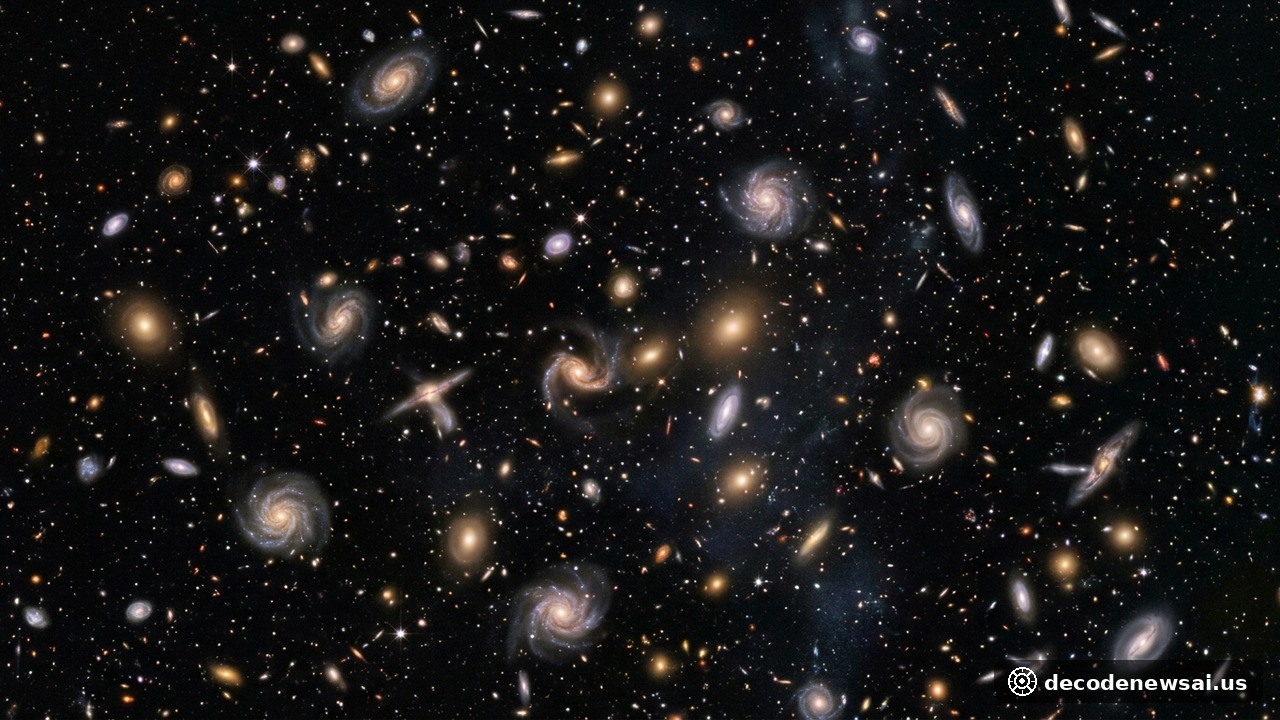
Mikko Pöntinen of the University of Helsinki used custom moving-object software. He spotted the streak across 16 exposures in five fields of view. They lay within Euclid Deep Field North.
The International Astronomical Union's Minor Planet Center confirmed the comet. It was Oct. 8.
The unusual orbit crosses the Dark-Universe Survey.
Euclid has a six-year primary mission. It maps billions of galaxies. It reaches 10 billion light-years. It probes dark matter and dark energy.
Euclid deliberately avoids the dusty plane of the Solar System. Most comets travel there. C/2026 S1 (Euclid) follows a steep orbit above the planetary plane.
That orbit allowed Euclid's routine scanning. It captured the glowing coma. The coma was dust and gas.
Alerts for future Comet Interceptor mission are tested.
C/2026 S1 is not a viable target for ESA's upcoming Comet Interceptor spacecraft. The workflow, mission scientists said, provides a real-world test. The workflow was rapid detection and alert. It flags distant, pristine comets early.